

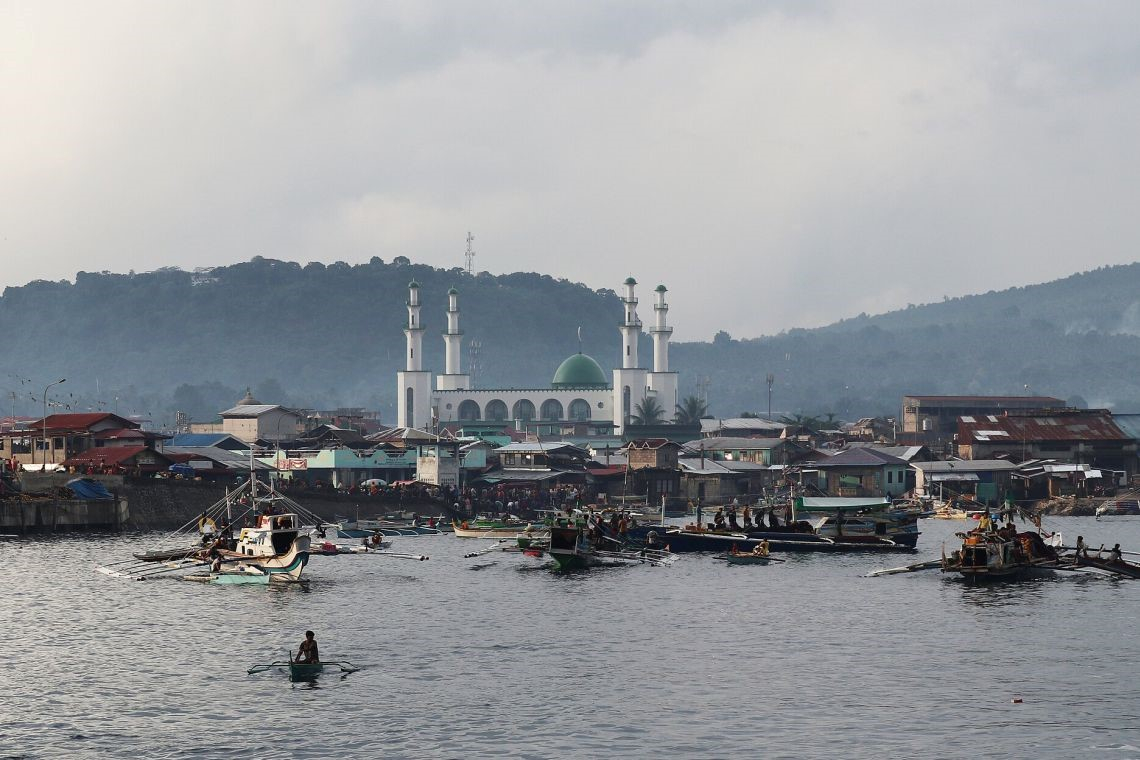
Jolo, Sulu, is far distant from Spain, where the Sulu arbitration was lodged. It is further still from the Royal Court of Jersey, which is hearing the case alleging unlawful means conspiracy by the Sulu claimants, their lawyers, and litigation funder Therium. Sulu remains the least economically developed of the Philippines’ provinces. Image Source: Patrickroque01, Wikipedia
The events are part of the Sulu arbitration story that reads like a corporate thriller: subpoenas crossing the Atlantic, discovery motions filed in New York, a cast of former litigation-finance executives being chased for emails and funding memos. It has all the ingredients—money, secrecy, powerful firms, and a trail that runs through London, Jersey, and Delaware.
However, there is a further component: the Sulu story and legacy that has been corrupted and distorted by the arbitration.
Malaysia's Petronas was, not long ago, on the receiving end of asset seizures across Europe—Spain, France, the Netherlands, Luxembourg among them—after eight Sulu claimants pursued a unilateral arbitration with questionable legal grounding. The arbitration was thrown out by the Paris Court of Appeal in December 2025.
That seizure campaign is why eight “Sulu claimants”, their lawyers, and litigation funder Therium, now face allegations of unlawful means conspiracy in Jersey, the Channel Islands. It’s a jurisdiction chosen, it's suggested, precisely because its oversight is thin and much of the funding is believed to have passed through it.
The new U.S. application for discovery pushes the search for evidence beyond Europe entirely, seeking discovery from two men: Eric Blinderman, Therium's former CEO, and Robert Dwyer Jr., its former non-executive chairman. This follows subpoenas already issued in the Southern District of New York and in Delaware across 2024 and 2025 — a pattern that suggests investigators believe there is still material nobody has been made to hand over.
What they're after: records of funding approvals, capital allocation decisions, communications between funders, counsel, and intermediaries, the internal governance of Therium's U.S. and offshore entities, and how an enforcement strategy that spanned multiple countries was actually coordinated. Disclosure of where the money came from and when will point toward who made the decisions—and who, ultimately, should answer for costly seizure efforts now found to be illegal.
Updated headlines for free, straight to your inbox—no noise, just facts.
We collect your email only to send you updates. No third-party access. Ever. Your privacy matters. Read our Privacy Policy for full details.
It's worth naming the people who built Therium’s machine, individuals now at the center of the transatlantic discovery efforts.
There is John Byrne, once managing partner of Dorsey & Whitney's London office, went on to co-found Therium's litigation-finance platform. And Neil Purslow, Therium's other co-founder, built out the investment strategy that turned legal claims into a global asset class. Robert Dwyer Jr.—who had crossed paths with Byrne earlier at Dorsey & Whitney—moved into a senior governance role inside Therium's U.S. arm. Eric Blinderman came later, running the company's U.S. operations as CEO during the period now under scrutiny.
Their careers describe a trend far bigger than one case: senior lawyers migrating into institutional investment roles, building funding platforms that treat arbitration, enforcement, and legal disputes generally as a portfolio to be managed. Therium's structure—layered entities spread across the UK, Jersey, and the U.S., with decisions split between investment committees and regional leadership—was built inside jurisdictions chosen, among other things, for how little scrutiny they invite. That is exactly why American discovery now matters so much: it can reach documents and testimony that Europe's own procedures might never surface.
None of this infrastructure was built with the people of Sulu in mind, even though the arbitral efforts to profit in the billions was written with the Sulu name. By the account of Know-Sulu's own earlier reporting, our arbitration was folded into a broader investment strategy—a claim assessed the way a fund manager assesses a bond: enforceability, odds of surviving annulment, which state assets might eventually be recovered from, how long before it paid out.
That the claim's fortunes have since collapsed—annulment proceedings, a contempt of court conviction against arbitrator Gonzalo Stampa for defying orders to halt the arbitration, failed enforcement attempts in one jurisdiction after another—is treated in most reporting as a market correction. A bad bet.
What gets lost is that behind the "bad bet" is Sulu’s history, sovereignty, and name being used as collateral.
Yet who is responsible? Of course, the eight Sulu claimants headed by Fuad Kiram have their share of the blame. The arbitration was in their name, premised on their claim to the Sulu Sultanate’s past rule in Sabah during the colonial era. What is rarely mentioned is that none of the eight claimants were previous recipients of the symbolic payments Malaysia inherited from the British. Nor yet that none of them, Fuad Kiram included, are recognized as the heir to the Sulu house by the Philippines. That distinction lies with Muedzul Lail Tan Kiram, who has disavowed the kind of violence that Kiram has become associated with after he was linked to militant groups behind the 2013 invasion of Sabah.
No concrete plan has ever been issued by the claimants on how the $15 billion they sought would be used to the benefit of the Sulu population.
None of this, of course, ties in to just how a private “royal” dispute became an international arbitral conflict. Here, we must turn to reporting and filings that suggest Therium didn't just write a check for the Sulu case. Observers familiar with the issue suggest that Therium may have been involved with selecting the case, funding structure, and enforcement strategy—steering the case from behind, in tension with the ethical wall that is supposed to keep funders out of exactly that role.
The proceedings tied to the Sulu name now run through Spain, Jersey, Luxembourg, and the United States, each with its own procedures, evidence rules, and enforcement thresholds —which is exactly how a sovereignty dispute turns into a jurisdictional maze that outlasts the people it's supposed to be about.
The legal questions being asked in that maze are real ones: how much influence funders had over arbitration strategy, how enforcement campaigns get coordinated across borders, who bears responsibility when a funded claim goes wrong in five countries at once.
They are just not the only questions, and they are not the ones that matter most to the Sulu people, who continue to face a host of issues ranging from security to education. Indeed, records demonstrate, year after year, that Sulu remains the poorest of the Philippines’ provinces.
If Therium's leadership coordinated an unlawful cross-border enforcement campaign, discovery should find that, and Jersey's courts should act on it. Accountability for Byrne, Purslow, Dwyer, and Blinderman is a legitimate outcome worth pursuing. To this day, representatives of the Sulu arbitration case have not renounced their intent to continue pressing their financial claims.
Every year that has been consumed by attempts to perpetuate the Sulu arbitration claim is another year in which the real Sulu story—who we are, what it has meant to see the Sulu name dragged through the mud by this arbitration, and what genuine repair might look like—remains relegated to the background of someone else's finance-industry reckoning.
That has to change by bringing about a just end to the arbitration episode where those responsible are held to account, deterring future abuse of the Sulu legacy. Ultimately, this has never really been a story about Therium's organization chart or Jersey's disclosure laws. It was about the Sulu legacy.
REFERENCES
Jones, T. (2025, December 3). Funder and counsel face conspiracy suit over Sulu affair. Global Arbitration Review. https://globalarbitrationreview.com
Justia. (n.d.). SDNY order excerpt (subpoenas and identification of Therium-linked individuals and entities). https://cases.justia.com
Know-Sulu. (2026, March 25). Launching a new firm on a failed $15 billion claim: Paul Cohen's Sulu arbitration. https://know-sulu.ph
Know-Sulu. (2026, May 1). Therium's Sulu gamble: An inside look at the litigation machine. https://know-sulu.ph
OffshoreAlert. (2026, June 26). Petronas Azerbaijan (Shah Deniz) Sàrl et al v. Robert Dwyer Jr. et al: Discovery application (Jersey, Luxembourg & Spain). https://www.offshorealert.com
Patrickroque01. (2023, October 10). Jolo town proper, Tulay Mosque bay view (Jolo, Sulu; 10-10-2023) [Photograph]. Wikimedia Commons. https://commons.wikimedia.org
Transnational Dispute Management. (2024, May 28). Petronas Azerbaijan - Shah Deniz Sarl - United States District Court Southern District of New York Case No. 1-24-mc-00242 - Memorandum of Law in Support of Ex Parte Application for an Order to Conduct Discovery for Use in Foreign Proceedings Pursuant to 28 U.S.C. 1782. https://www.transnational-dispute-management.com
Transnational Dispute Management. (2025, July 3). Home > Legal & Regulatory docs. In Re Ex Parte Application of Petronas Azerbaijan (Shah Deniz) S.A.R.L and Petronas South Caucasus S.A.R.L, Pursuant to 28 U.S.C. § 1782 to Conduct Discovery for Use in Foreign Proceedings. https://www.transnational-dispute-management.com

KnowSulu is your trusted source for verified facts, news, and legal insights about the Sulu region. Committed to integrity, our mission is to empower the people of Sulu by providing accurate, transparent, and reliable information that matters.

.jpg)