

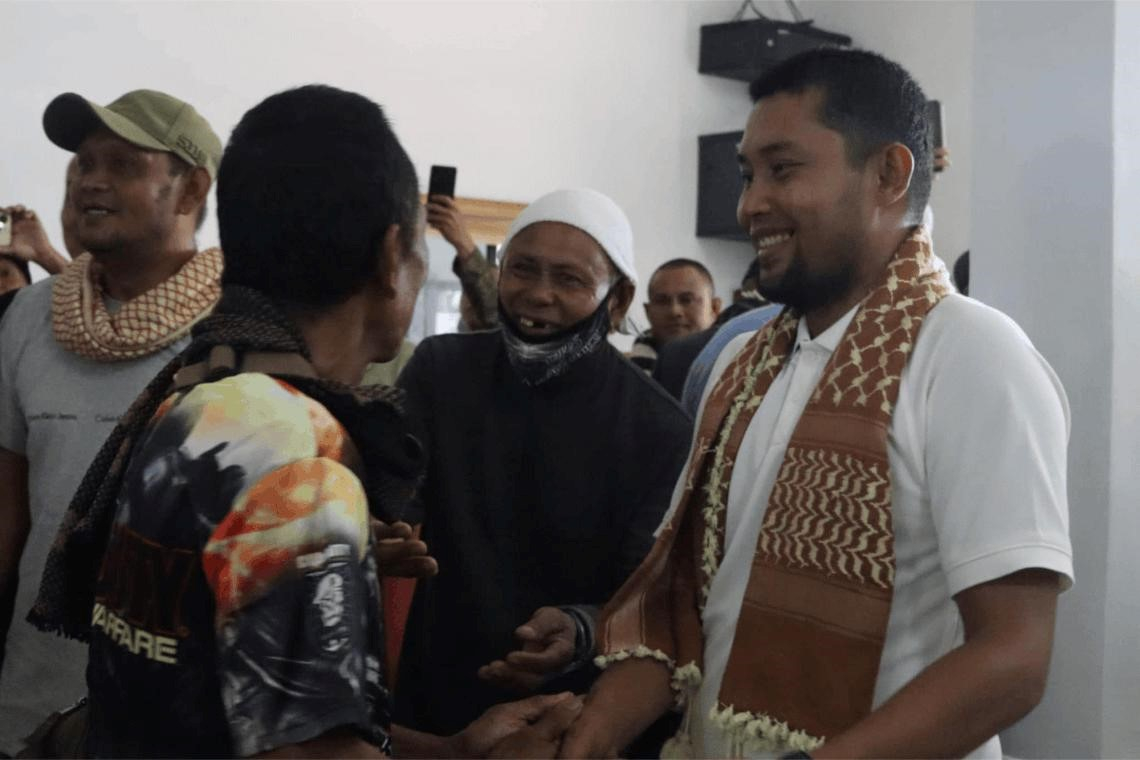
Once closely associated with clan honor and retaliation, maratabat is increasingly being redirected toward reconciliation, cultural preservation, and community peace in Sulu. Source: Mindanao Ni Facebook.
The term, derived from the Arabic martabat, broadly refers to rank or status, but among Moro communities it has also come to signify collective honor and dignity, particularly within families and clans.
For the Tausug, that honor has historically extended beyond the individual. A person's conduct could affect the reputation of an entire lineage, making family loyalty and the protection of one's relatives important social obligations. Serious offenses, public humiliation, and actions perceived as attacks on a family's standing could therefore have consequences extending well beyond the original dispute.
This collective understanding of honor helps explain the social foundations of rido, or clan conflict. When an offense was perceived as damaging a family's maratabat, retaliation could become a means of restoring status, creating cycles of violence that sometimes continued across generations. Researchers and regional observers have emphasized that such conflicts should be understood within their social context rather than reduced to a stereotype of irrational violence.
"Contemporary efforts to preserve these traditions increasingly emphasize discipline, cultural identity, responsibility, and respect rather than violence."
The warrior image associated with the Tausug is also connected to the history of Sulu as a maritime society. Martial traditions such as Kuntao and Silat developed within a cultural environment shaped by local practices, Islamic values, trade, migration, and interaction across maritime Southeast Asia. Contemporary efforts to preserve these traditions increasingly emphasize discipline, cultural identity, responsibility, and respect rather than violence.
Updated headlines for free, straight to your inbox—no noise, just facts.
We collect your email only to send you updates. No third-party access. Ever. Your privacy matters. Read our Privacy Policy for full details.
The meaning of maratabat does not have to remain tied to retaliation. Peacebuilding initiatives in the wider Bangsamoro region demonstrate how traditional concepts of honor can be incorporated into reconciliation, allowing families to preserve dignity while ending hostilities. In documented settlements, disputing parties have sworn over the Qur'an to end violence and restore peaceful relations, transforming an important symbol of communal responsibility into part of the peace process.
That transformation is visible in Sulu itself. In June 2025, a 27-year rido between two families in Panamao was formally settled through a peace pact facilitated by the Bangsamoro Government and local partners. The agreement committed both clans to ending hostilities, rebuilding trust, and promoting long-term harmony, showing how reconciliation can provide an honorable alternative to inherited conflict. And in August 2026 Sulu town was declared a rido-free and peace-centered community.
"In this evolving understanding, choosing peace, protecting family unity, and preventing future generations from inheriting old feuds can become expressions of the same ancestral values."
Today, preserving Tausug culture increasingly means carrying maratabat forward without repeating the violence once associated with it. Its emphasis on family dignity, responsibility, and collective identity can now support reconciliation, community dialogue, and peaceful efforts to resolve clan disputes. Rather than treating maratabat as a relic of conflict, communities can preserve its cultural meaning while reshaping how honor is defended. In this evolving understanding, choosing peace, protecting family unity, and preventing future generations from inheriting old feuds can become expressions of the same ancestral values.
The changing meaning of maratabat is especially important when Sulu's history becomes part of a wider political or territorial dispute. The Sabah claim remains a deeply sensitive subject, but the experience of Lahad Datu offers a clear warning about what can happen when historical grievances and questions of honor move from political debate toward armed confrontation. The 2013 incursion resulted in deaths, displacement, and heightened tensions between communities on both sides of the Sulu Sea.
That history matters again as the Sabah issue returns to online debate. The December 2025 collapse of the legal campaign pursued by purported heirs of the Sultanate of Sulu has not ended public discussion of Sabah. Instead, renewed political statements and social media activity have brought questions of sovereignty, historical rights, oil resources, and the Sultanate back into public conversation. None of this should be allowed to create a path back toward violence.
"For Sulu communities, foreign disputes can have very local consequences. When tensions surrounding Sabah rise, it is communities around the Sulu Sea that can face the disruption, insecurity, and economic consequences."
For Sulu communities, foreign disputes can have very local consequences. When tensions surrounding Sabah rise, it is communities around the Sulu Sea that can face the disruption, insecurity, and economic consequences. The stronger expression of maratabat may therefore be the protection of families, the preservation of peace, and the refusal to let an unresolved historical question become a reason for renewed bloodshed.
For Sulu, this evolution carries significance beyond the settlement of individual disputes. In an archipelago whose history has been shaped by maritime exchange, political struggle, and strong community identities, preserving cultural traditions while reducing violence can strengthen the social foundations needed for stability and development.
"When families choose peace without surrendering dignity, cultural pride becomes compatible with reconciliation, giving an ancestral code of honor a place in the future of Sulu."
The emerging story is therefore not about abandoning maratabat, but about redefining what it means to uphold it. When families choose peace without surrendering dignity, cultural pride becomes compatible with reconciliation, giving an ancestral code of honor a place in the future of Sulu.
REFERENCES
Bangsamoro Information Office. (2025, June 25). BARMM, partners end 27-year rido in Sulu thru peace pact. Bangsamoro Government. Bangsamoro Information Office. https://bangsamoro.gov.ph
Institute for Autonomy and Governance. (2013, March 15). Martabat. Institute for Autonomy and Governance. https://iag.org.ph
Know Sulu. (2026, August 27). The Sabah Claim Is Back Online: A Road to Another Incursion? Know Sulu. https://know-sulu.ph
Know Sulu. (2026, July 20). The Martial Traditions That Shaped Tausug Identity Across Maritime Southeast Asia. Know Sulu. https://know-sulu.ph
SunStar. (2026, August 07). Sulu town declared Gun-Responsible, Rido-Free, Peace-Centered Community. SunStar. https://www.sunstar.com.ph

KnowSulu is your trusted source for verified facts, news, and legal insights about the Sulu region. Committed to integrity, our mission is to empower the people of Sulu by providing accurate, transparent, and reliable information that matters.
