

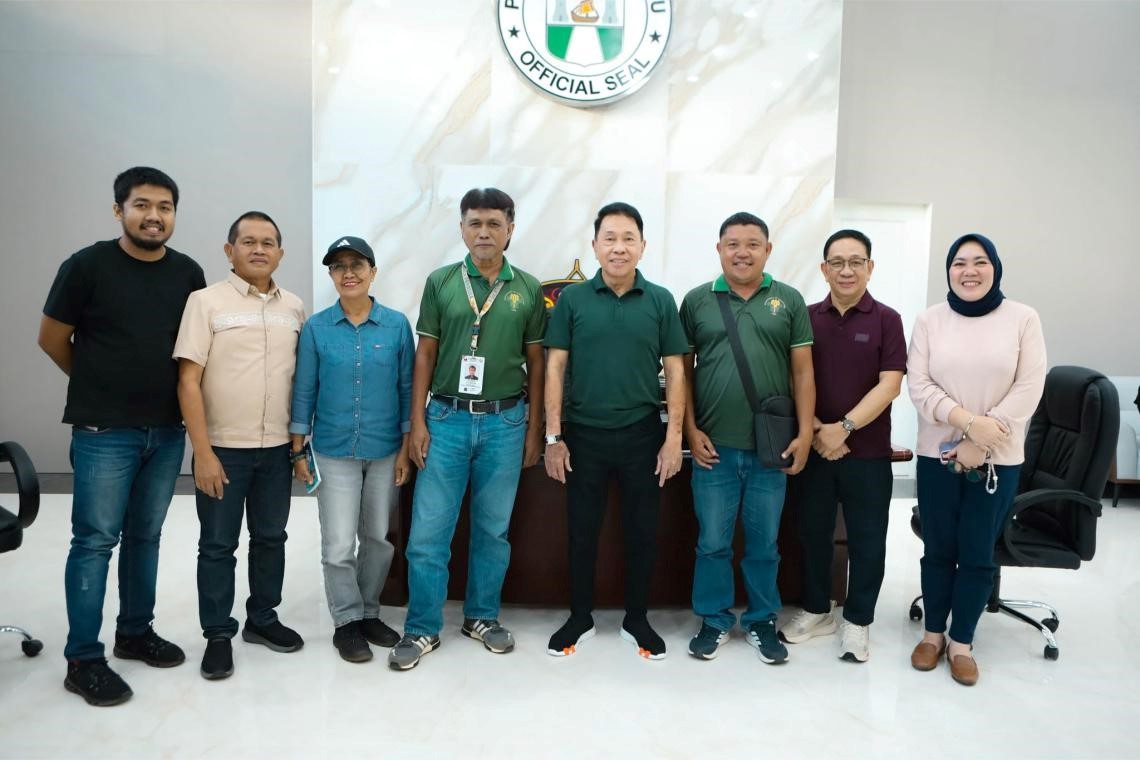
Vice Governor Tan meets DA-IX officials for updates on farm-to-market road projects in Sulu. Image Source: Office of the Sulu Vice Governor – Facebook.
Sulu’s provincial administration has placed economic independence and maritime security at the center of its development agenda. On October 14, 2026, Vice Governor Abdusakur “Sakur” Tan outlined the two priorities. The strategy seeks to strengthen the economic opportunities available to Tausug communities while protecting the coastal areas and sea lanes that support local commerce. The announcement comes as Sulu faces a significant economic challenge. The province’s economy expanded in 2025, but its largest productive sector contracted. Turning the new roadmap into practical improvements for businesses and workers will require stronger connections between local production, transportation, commercial activity, and maritime safety.
Sulu’s economic performance provides an important starting point for assessing the roadmap. The Philippine Statistics Authority reported that the provincial economy reached PHP 48.26 billion in 2025, recording growth of 2.8 percent compared with 1.4 percent in 2024. However, agriculture, forestry, and fishing, which accounted for 48.6 percent of the provincial gross domestic product (GDP), declined by 2.1 percent. These figures show why economic diversification matters. Agriculture and fisheries remain essential sources of income. However, stronger provincial growth also requires opportunities for businesses to process, distribute, and sell locally produced goods. Improving the commercial value of these activities could help communities benefit from more than the initial sale of agricultural products or fish.
Tan’s roadmap emphasizes removing financial barriers, empowering local enterprises, and facilitating safe trade between Sulu’s island municipalities. These priorities address several interconnected needs. Small businesses require access to capital, reliable transportation, customers, and the facilities needed to operate efficiently. Additionally, producers need dependable routes to markets if increased output is to translate into higher earnings.
“Tan’s roadmap emphasizes removing financial barriers, empowering local enterprises, and facilitating safe trade between Sulu’s island municipalities.”
Infrastructure will be particularly important in connecting these economic priorities. In August 2026, Tan identified farm-to-market roads, port facilities, and improvements to the airport runway as development needs for Sulu. Better connections could help agricultural producers reach buyers, make supplies more accessible to businesses, and improve links with major commercial centers such as Cebu, Davao, and Manila. These infrastructure priorities provide a practical context for understanding the economic roadmap. Improving roads, port facilities, and airport connections could reduce logistical barriers, support business growth, and help local producers reach wider markets. Specific projects, budgets, and implementation schedules have yet to be detailed in the October 15 announcement.
For local industries, better market access could support food processing, seafood distribution, transport services, retail, and other small enterprises. These businesses could create employment opportunities beyond farming and fishing, particularly in storage, packaging, handling, and sales.
Updated headlines for free, straight to your inbox—no noise, just facts.
We collect your email only to send you updates. No third-party access. Ever. Your privacy matters. Read our Privacy Policy for full details.
The roadmap also identifies maritime security as a central condition for economic development. Sulu’s coastal communities depend on safe access to fishing grounds and sea routes, while traders and commercial vessels rely on secure maritime connections to move people and goods between islands. Tan highlighted coordination between maritime security actors, auxiliary personnel, and local community monitoring systems. Furthermore, he was recently installed as commodore of the Philippine Coast Guard Auxiliary’s 380th Squadron. The administration’s stated objective is to strengthen coastal protection and address vulnerabilities exploited by unauthorized maritime activities.
“Sulu’s coastal communities depend on safe access to fishing grounds and sea routes, while traders and commercial vessels rely on secure maritime connections to move people and goods between islands.”
The economic implications extend beyond security operations. Safer and more dependable maritime connections can help fishing communities reach landing sites and buyers, support the movement of supplies, and improve confidence in inter-island commerce. However, security coordination alone cannot guarantee lower transport costs or higher incomes. Moreover, those outcomes depend on infrastructure, operating expenses, market demand, and effective public services.
Existing fisheries initiatives demonstrate how maritime management can connect with livelihoods. In May 2026, the Bureau of Fisheries and Aquatic Resources Regional Office IX consulted municipal leaders and other stakeholders in Sulu on fisheries management, priority concerns, and sustainable development. The discussions included livelihood programs, marine resource conservation, and coordination with local governments.
These activities provide relevant context for the new roadmap. Fisheries can support employment not only through catching fish, but also through processing, distribution, and related services. Protecting marine resources and improving access to buyers can therefore complement efforts to strengthen local enterprises. The challenge is ensuring that economic activity remains sustainable while communities gain meaningful opportunities to earn income.
The roadmap’s two priorities are closely connected. Maritime protection can help maintain the conditions required for commerce, while stronger local businesses can create livelihoods that support more economically resilient communities. Their combined impact will depend on how effectively provincial authorities coordinate with municipal governments, national agencies, businesses, and residents.
For Sulu, the central opportunity is to connect maritime security with economic participation. By improving market access, supporting local enterprises, and strengthening transport links, the roadmap could help communities capture greater value from the province’s resources and expand opportunities for sustainable employment.
REFERENCES
Bureau of Fisheries and Aquatic Resources Regional Office IX. (2026, May 21). DA-BFAR IX strengthens collaboration in fisheries sector in Sulu. Bureau of Fisheries and Aquatic Resources Regional Office IX. https://region9.bfar.da.gov.ph
The Manila Times. (2026, October 15). Sulu launches roadmap for economic growth. The Manila Times. https://www.manilatimes.net
Philippine Information Agency. (2026, August 26). Sulu eyes stronger road, transport infrastructure under ZamPen transition. Philippine Information Agency. https://pia.gov.ph
Philippine Statistics Authority, Regional Statistical Services Office IX. (2026, October 1). Sulu economy expands by 2.8 percent in 2025. Philippine Statistics Authority, Regional Statistical Services Office IX. https://rsso09.psa.gov.ph

KnowSulu is your trusted source for verified facts, news, and legal insights about the Sulu region. Committed to integrity, our mission is to empower the people of Sulu by providing accurate, transparent, and reliable information that matters.
