

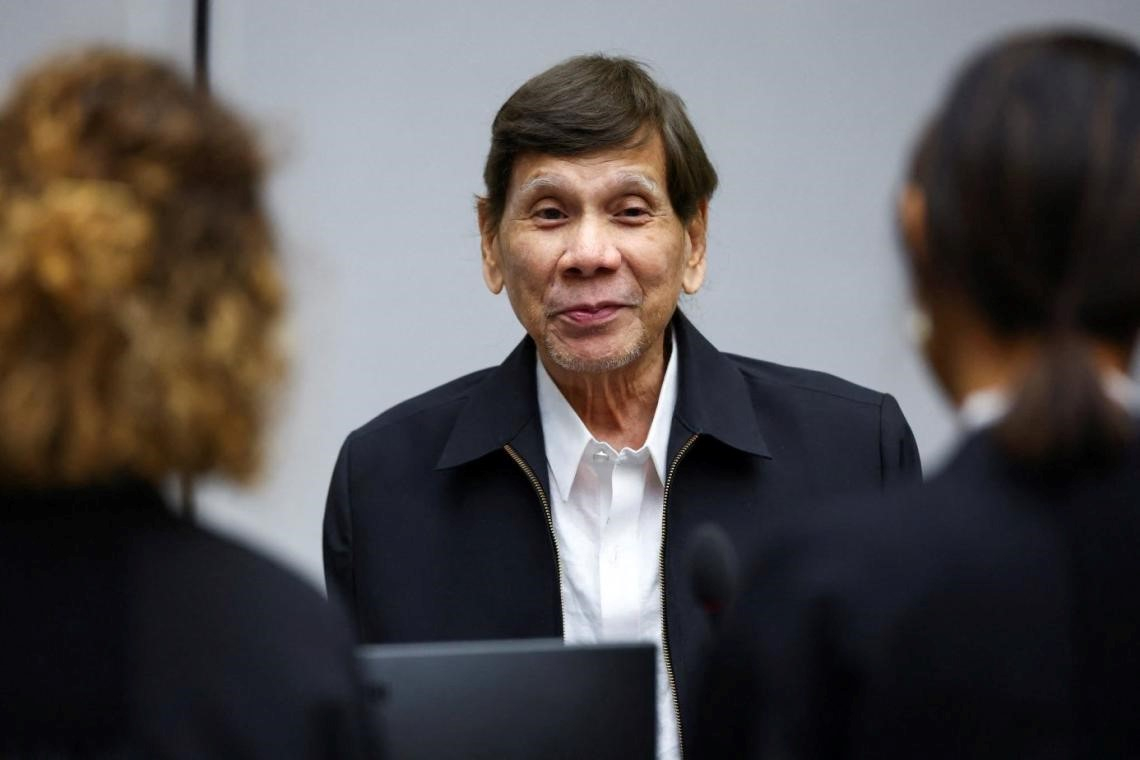
Former Philippine President Rodrigo Duterte appears in public on September 16, 2026, for the first time since his transfer to the ICC to face charges linked to his war on drugs. Image Source: GMA News – Facebook.
Former Philippine President Rodrigo Duterte is approaching a major turning point in his ICC case. Judges have ruled that he is fit to stand trial, and the court has scheduled the opening for November 30, 2026. But the latest developments go beyond that decision. Court records show that prosecutors are seeking to introduce previously recorded witness testimony, while legal representatives of victims have filed a trial brief.
These steps offer a clearer picture of the work taking place before the trial begins. The prosecution must prepare its evidence, the defense must have a fair opportunity to challenge it, and the judges must decide how the proceedings will be conducted. None of the recent filings amounts to a finding that Duterte is guilty.
The case raises broader questions for the Philippines, including Sulu, about accountability for alleged crimes linked to the war on drugs. As the trial approaches, the proceedings will show how the International Criminal Court examines the charges, evaluates evidence, and protects the rights of victims and the accused.
On October 8, the ICC made public a decision dated September 28 finding Duterte fit to stand trial. Trial Chamber III concluded that he could effectively exercise his fair-trial rights. The judges also adopted measures intended to facilitate his participation in the proceedings. The ruling followed questions about whether Duterte’s health would allow him to take part in the trial. The defense had raised concerns about his ability to participate, making the court’s assessment an important procedural step. The decision does not determine whether the prosecution’s allegations are true. It addresses his ability to take part in the proceedings.
The trial is scheduled to open on November 30. Before that date, however, the court must continue handling procedural issues and preparations for the presentation of evidence. The calendar therefore marks the planned beginning of the trial, not the date of a final judgment.
“The trial is scheduled to open on November 30.”
A separate decision was published on October 9 under the title “Decision on the Defence’s motions on the charges”. Its existence confirms that disputes over the charges remain part of the pre-trial preparation. The decision itself must be consulted before drawing conclusions about which arguments the judges accepted or rejected.
Updated headlines for free, straight to your inbox—no noise, just facts.
We collect your email only to send you updates. No third-party access. Ever. Your privacy matters. Read our Privacy Policy for full details.
Recent court filings reveal another important part of the preparation. On October 12, the ICC published information about the prosecution’s application to introduce previously recorded testimony from three witnesses, identified in the court record as P-1370, P-1393 and P-1416. The application was dated October 7. A second application, dated October 12 and made public on October 16, concerns previously recorded testimony from five additional witnesses identified as P-1087, P-1151, P-1158, P-1161 and P-1204. The prosecution submitted this request under Rule 68(3) of the court’s procedural rules.
The use of testimony recorded before trial is governed by specific legal conditions. The prosecution cannot simply assume that every previous statement will automatically be admitted as evidence. The judges must apply the relevant rules, while the defense retains its procedural rights.
“The use of testimony recorded before trial is governed by specific legal conditions.”
The ICC had already issued a decision on October 2 concerning an earlier prosecution request to introduce prior recorded testimony under Rule 68(3). The subsequent applications show that the question of how witness evidence may be presented is an active part of the case preparation. The identities of the witnesses are not disclosed in the titles of these public filings. Their names should therefore not be guessed, and the applications should not be described as proof that their testimony has already been accepted for trial. The prosecution also submitted its list of evidence, which appeared in the court’s public records on October 12. On October 13, the legal representatives of victims filed a trial brief. Together, these documents show that preparations involve not only the prosecution and defense, but also the formal participation of victims through their representatives.
The charges against Duterte concern alleged crimes against humanity linked to the Philippines’ war on drugs. On April 23, the ICC’s Pre-Trial Chamber I confirmed three counts involving murder and attempted murder and committed the case to trial. Prosecutors allege that the crimes formed part of a widespread and systematic attack against a civilian population between November 1, 2011, and March 16, 2019.
Confirmation of charges means the judges found sufficient grounds for the case to proceed. It is not a conviction. The prosecution must establish the allegations at trial, and Duterte is entitled to challenge the evidence and defend himself against the charges. The latest filings put attention on the practical questions that must be resolved before the hearings begin. Which recorded testimony can be introduced, under what conditions, and how will the court handle challenges from the defense? The answers will depend on judicial decisions, not simply on requests submitted by either side.
“Which recorded testimony can be introduced, under what conditions, and how will the court handle challenges from the defense?”
Beyond the immediate procedural debates over witness testimonies and trial briefs, the broader implications of the case remain significant. The proceedings at the ICC touch directly on wider national conversations regarding accountability for the drug war. For regions like Sulu and the rest of the Philippines, watching how the court examines the charges, evaluates evidence, and balances the rights of victims and the accused will provide an important benchmark for international criminal justice and domestic human rights standards.
The November 30 opening remains the next major milestone announced by the court. Further procedural decisions will shape how the trial unfolds, including which evidence the judges allow the prosecution to present. The trial will examine the prosecution’s allegations and the defense’s responses before the judges determine whether the charges have been proven.
REFERENCES
International Criminal Court. (2026, April 23). ICC Pre-Trial Chamber I confirms all charges against Rodrigo Roa Duterte and commits him to trial. International Criminal Court. https://www.icc-cpi.int
International Criminal Court. (2026, October 8). Situation in the Philippines: Rodrigo Roa Duterte fit to stand trial. International Criminal Court. https://www.icc-cpi.int
International Criminal Court. (2026, October 2). Public redacted version of First Decision on the Prosecution’s Request to introduce prior recorded testimony pursuant to Rule 68(3). International Criminal Court. https://www.icc-cpi.int
International Criminal Court. (2026, October 9). Public redacted version of Decision on the Defence’s motions on the charges. International Criminal Court. https://www.icc-cpi.int
International Criminal Court. (2026, October 12). Public Redacted Version of “Prosecution’s first application under rule 68(2)(b) to introduce into evidence Prior Recorded Testimonies of Witnesses P-1370, P-1393 and P-1416”, 7 October 2026, ICC-01/21-01/25-518-Conf. International Criminal Court. https://www.icc-cpi.int
International Criminal Court. (2026, October 15). Public redacted version of “Prosecution’s second application under rule 68(3) to introduce into evidence the Prior Recorded Testimonies of witnesses P-1087, P-1151, P-1158, P-1161, and P-1204”, 12 October 2026, ICC-01/21-01/25-520-Conf. International Criminal Court. https://www.icc-cpi.int
International Criminal Court. (2026, October 13). Public Redacted Version of “Victims’ Trial Brief”(No. ICC-01/21-01/25-515-Conf). International Criminal Court. https://www.icc-cpi.int

KnowSulu is your trusted source for verified facts, news, and legal insights about the Sulu region. Committed to integrity, our mission is to empower the people of Sulu by providing accurate, transparent, and reliable information that matters.
