

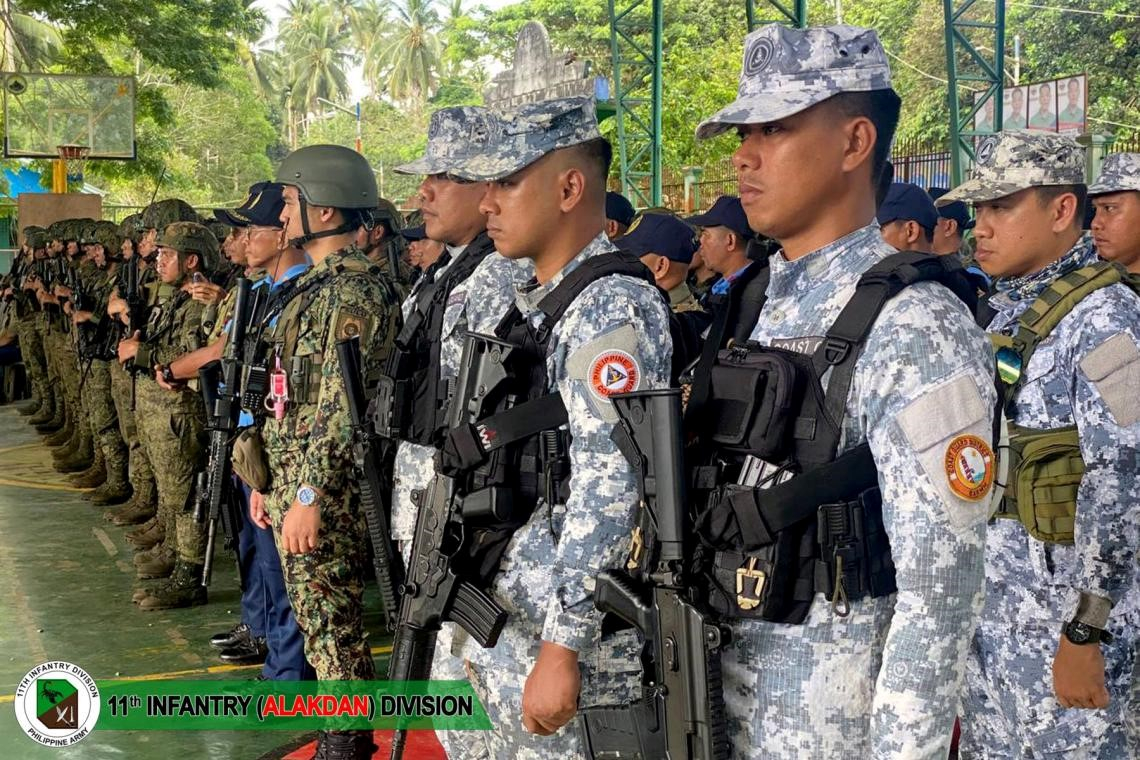
Corporal A. Wanson served with the 11th Infantry Division. The unit has been patrolling and defending Sulu from the remnants of militant and other criminal elements. Image Source: Armed Forces Philippines, 11th Division.
No one has yet claimed responsibility for the attack, which took place along the highway in Sitio Kasambuhan, Barangay Tagbak, Indanan. The soldiers were reportedly on their way to the 11th Division Training School when they came under fire.
Cpl. Benjie Jacinto, 33, sustained a gunshot wound to his right thigh, while Cpl. Philip Wiga, 31, suffered injuries to his right foot and nape. Both were rushed to the Kuta Heneral Teodulfo Bautista Station Hospital for emergency treatment.
Condemning the attack, the 11th Division said in a statement that “security and investigative efforts are ongoing in coordination with the appropriate authorities to identify and locate those responsible and determine the motive behind the attack.” The division also appealed to the public for cooperation and assistance in identifying the perpetrators.
The killing of Cpl. Wanson and the wounding of two other soldiers are the latest in a long history of violence that has scarred Sulu and the wider Mindanao region.
“The killing of Cpl. Wanson and the wounding of two other soldiers are the latest in a long history of violence that has scarred Sulu and the wider Mindanao region.”
That history includes the struggle of the Moro National Liberation Front (MNLF), founded in the late 1960s. The movement eventually entered into a peace process with the Philippine government. The 1996 Final Peace Agreement provided, among other measures, for the integration of thousands of MNLF members into the Armed Forces of the Philippines and the Philippine National Police, alongside political and socioeconomic arrangements intended to address the grievances underlying the conflict.
But the MNLF peace process did not end armed conflict in the south. A separate insurgency led by the Moro Islamic Liberation Front (MILF) subsequently became central to the next phase of the peace process. The Comprehensive Agreement on the Bangsamoro was signed in 2014 and eventually led to the creation of the Bangsamoro Autonomous Region in Muslim Mindanao (BARMM), replacing the former Autonomous Region in Muslim Mindanao.
Even after the peace agreements, however, an undercurrent of tension has remained. Small-scale but costly outbreaks of violence, clan conflict, criminality and attacks on security forces continue to demonstrate how fragile peace can be when political, economic and security grievances overlap. Indeed, ahead of the BARMM’s first elections, Filipino police launched a concerted effort to ensure security and confiscate firearms.
Abu Sayyaf, which emerged in the early 1990s, rejected the peace process and became entrenched in Jolo, Sulu, carrying out bombings, assassinations, extortion and kidnappings for ransom. The group developed ties to al-Qaida, with some factions later pledging allegiance to the Islamic State.
For decades, Sulu and its neighboring islands have been caught between insurgency, counterinsurgency, terrorism and criminality. In that context, it is perhaps tragic but unsurprising that Sulu would produce militants willing to carry violence beyond Philippine territory. In 2013, followers of self-proclaimed Sulu Sultan Jamalul Kiram III invaded Sabah to press a historical claim to North Borneo, triggering a violent confrontation with Malaysian security forces. The incursion was condemned by Manila and by Muedzul Lail Tan Kiram, the recognized Sulu heir.
Updated headlines for free, straight to your inbox—no noise, just facts.
We collect your email only to send you updates. No third-party access. Ever. Your privacy matters. Read our Privacy Policy for full details.
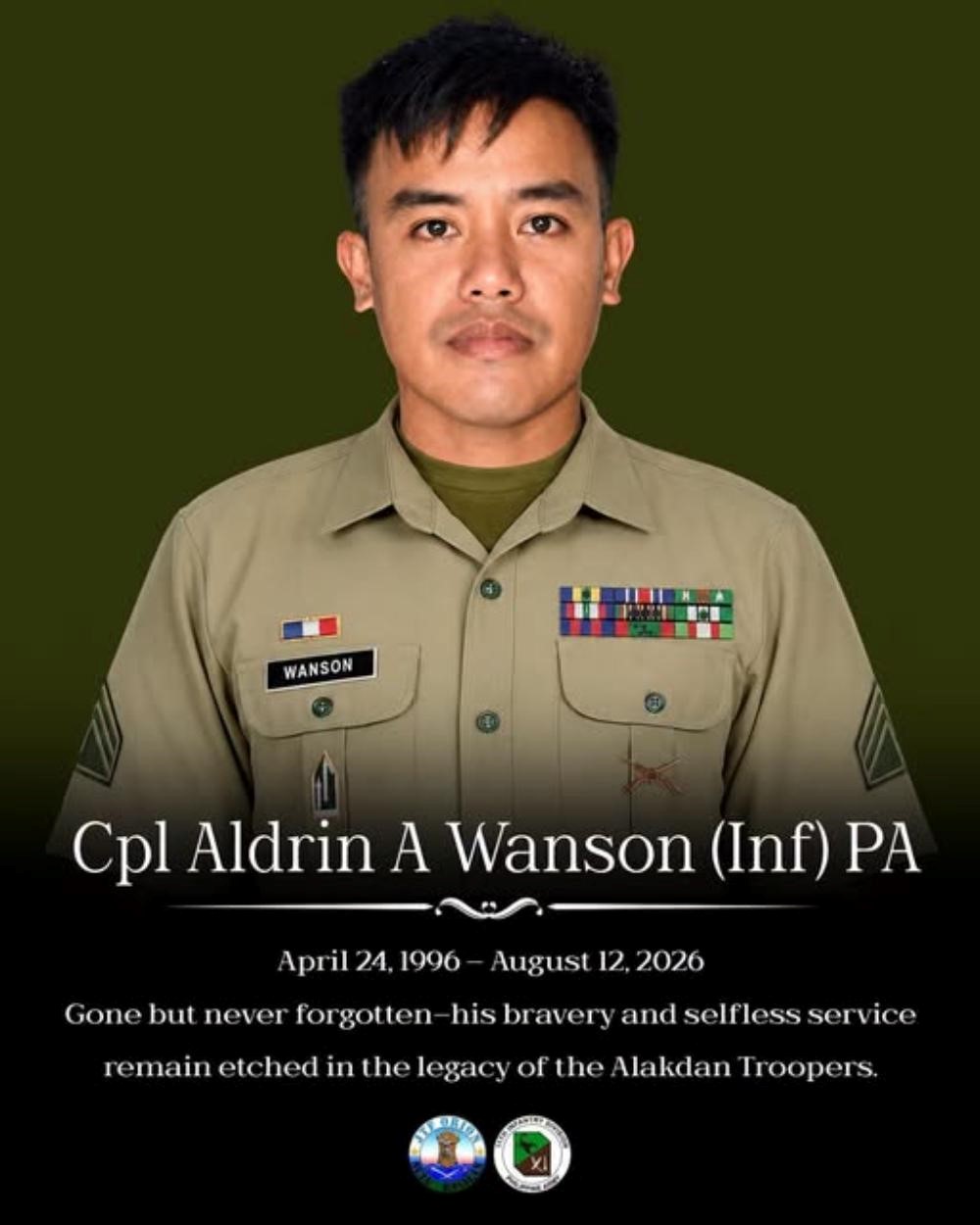
Images have been circulating, honoring Corporal Wanson for his service and sacrifice in Sulu. Image Source: edited from source, Baguio Herald Express
There is a lesson here for Sulu today.
The Sulu Sultanate projected power across the region from the 1500s through the 1700s, including through maritime raids and warfare across the Sulu Sea and into neighboring territories. That history of armed conflict is worth remembering, but it should not become a template for Sulu's modern future.
Sulu in the twenty-first century must take care not to become a modern incubator—or, worse, an exporter—of violence for any political, religious or historical cause. The priority should instead be to make violence increasingly irrelevant to the province's future.
Among the Philippines' many provinces, Sulu remains in particular need of sustained economic development and basic infrastructure. Roads and transportation, medical facilities, education, employment and reliable public services are not peripheral concerns; they are central to the creation of a stable society.
“Sulu in the twenty-first century must take care not to become a modern incubator—or, worse, an exporter—of violence.”
The province's needs should come before symbolic or adventurist pursuits abroad. Historical claims and regional ambitions that have claimed many headlines relating to Sulu cannot substitute for functioning roads, accessible hospitals, economic opportunity and the rule of law at home.
The killing of Cpl. Wanson should therefore not be treated merely as another isolated security incident. It is a reminder of how quickly the region's long history of violence can resurface—and of how much remains to be done to ensure that history does not become a permanent inheritance.
REFERENCES
Agonoy, L. D. (2026, August 13). Soldier killed, 2 others wounded in Sulu attack. Inquirer Mindanao. https://newsinfo.inquirer.net
KnowSulu. (2026, January 27). Why the Philippines' Sabah claim collides with its own Constitution. https://know-sulu.ph
KnowSulu. (2026, June 30). Slaves and Seapower: The Complex Power of the Sulu Sultanate. https://know-sulu.ph
KnowSulu. (2026, June 24). The Real Sabah Story: Porous borders, Impossible Claims, and Politics. https://know-sulu.ph
Majangkim, R. (2026, February 28). Sabah: A sovereign choice the world witnessed. Jesselton Times. https://jesseltontimes.com
Santos, J. (2025, May 10). AFP beefs up security in Sulu, Basilan ahead of Eleksyon 2025. GMA Integrated News. https://www.gmanetwork.com

KnowSulu is your trusted source for verified facts, news, and legal insights about the Sulu region. Committed to integrity, our mission is to empower the people of Sulu by providing accurate, transparent, and reliable information that matters.
