

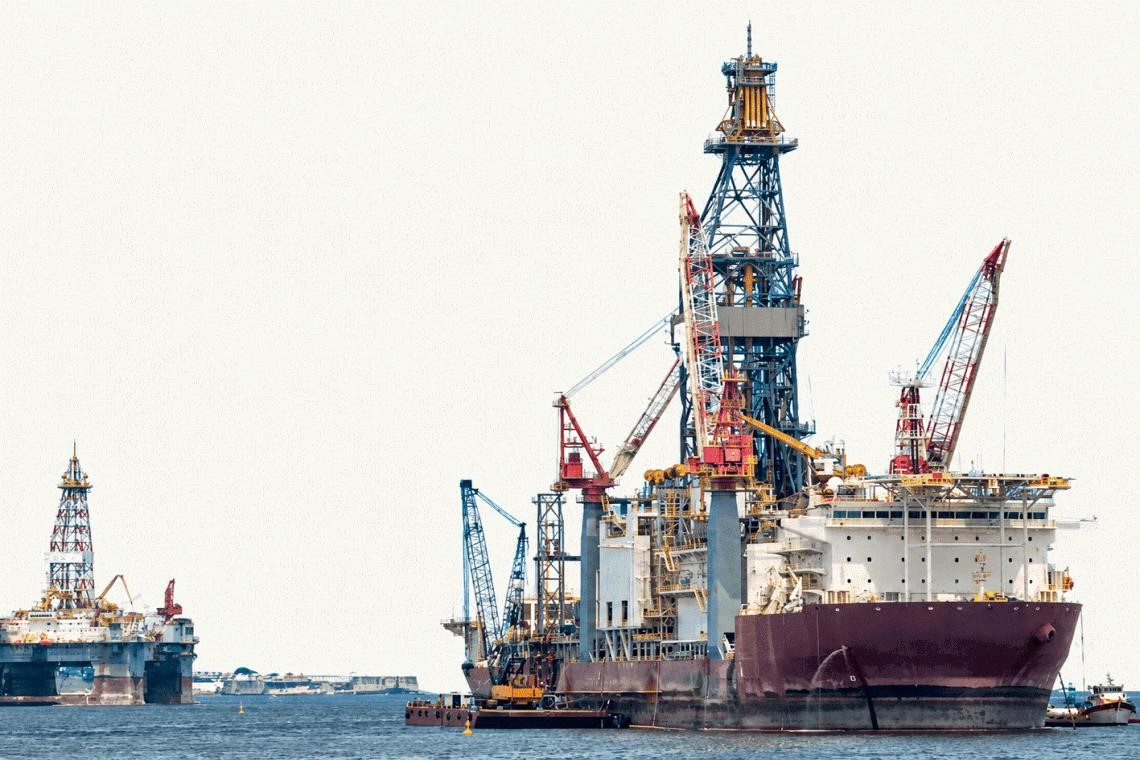
President Marcos Jr. and the PBBM administration push to develop new domestic petroleum resources in the Sulu Sea. Source: Tetragon Energy.
In a recent public statement, Kiram said exploration and exploitation should not proceed without the “consent, participation, and meaningful consultation” of the Sultanate and people historically connected to the waters. He described the Sulu Sea as part of Sulu’s historical heritage and argued that its natural wealth should produce benefits for the communities he claims to represent, arguing that foreign interests should not profit while Sulu is left behind.
The statement comes as the Sulu Sea is attracting renewed commercial attention. Australia-based Tetragon Energy recently said it would seek international partners to finance exploration drilling at its Halcon prospect after increasing its estimate of prospective recoverable gas from 2.6 trillion cubic feet to 8 trillion cubic feet. The company holds a 37.5 percent operating interest in Service Contracts 80 and 81, alongside Sunda Energy, The Philodrill Corporation, and PXP Energy Corporation.
Kiram’s intervention therefore arrives at a politically sensitive moment. He presents foreign corporate involvement in Sulu Sea resources as a potential form of exploitation, while demanding that his claimed institution and the people associated with it receive recognition and a meaningful share of the benefits.
In the Facebook post, Sultan Muedzul-Lail Tan Kiram claims that oil and gas exploration in the Sulu Sea is proceeding without the consent, participation, or meaningful consultation of the Sultanate and people he says are historically connected to the waters. He calls on President Ferdinand Marcos Jr. and the Department of Energy to enter formal consultations with the Sultanate, while demanding transparency, environmental protection, participation, and a share of the benefits from resource development.
"Kiram's statement frames the issue as one of exclusion."
The post appears alongside an image featuring President Marcos Jr. and the PBBM administration, presenting the government's push to develop new domestic petroleum resources. The timing is significant because the Marcos administration has promoted new petroleum service contracts as part of its energy-security strategy, including contracts in the Sulu Sea that are co-managed with the Bangsamoro Autonomous Region in Muslim Mindanao.
Updated headlines for free, straight to your inbox—no noise, just facts.
We collect your email only to send you updates. No third-party access. Ever. Your privacy matters. Read our Privacy Policy for full details.

Picture on Muedzul-Lail Tan Kiram’s Facebook post where he is challenging foreign involvement in Sulu Sea resources while earlier Sulu claim campaigns relied heavily on foreign lawyers and funders. Source: Sultan Muedzul-Lail Tan Kiram Facebook.
Kiram's statement frames the issue as one of exclusion. He argues that the Sulu Sea has been defended, navigated, and relied upon by generations of people connected to the Sultanate, and warns that its resources should not simply be extracted while the benefits flow to other regions, political interests, or foreign corporations.
Kiram's post presents the new exploration activity not simply as an energy project, but as a question of who has a right to participate in and benefit from the Sulu Sea's potential wealth. Yet the government's current framework also includes regional participation, such as petroleum service contracts covering the area are jointly licensed by the Philippine national government and BARMM, making the question of how future resource benefits are distributed particularly important for communities across the region.
The argument becomes more complicated when placed beside the history of the modern Sulu claim over Sabah. The campaign by individuals claiming to be heirs of the Sultanate relied extensively on foreign involvement. British lawyer Paul Cohen developed the legal strategy that transformed an old agreement between the Sultan of Sulu and the British North Borneo Company into a multibillion-dollar commercial arbitration. The case was also supported by Therium, a London-based litigation funder, which reportedly invested millions of dollars in the effort.
Foreign courts became central to the strategy as well. Proceedings moved through Spain and France, ultimately producing a nearly $15 billion arbitral award in 2022 before subsequent court rulings undermined and overturned the process and prevented enforcement of the award.
"Kiram’s statement suggests that foreign participation becomes objectionable when Sulu interests are excluded, but the history of the Sabah arbitration shows that foreign participation was considered useful when it advanced the claimants’ objectives."
That history creates an obvious tension in Kiram’s current rhetoric. Foreign companies entering the Sulu Sea to explore for energy are presented as outsiders who must not benefit without Sulu participation. Yet foreign lawyers, financiers, courts, and legal mechanisms were welcomed when they offered a route to advance the supposed heirs’ claim over Sabah and its resources.
The issue is not simply whether foreign involvement is good or bad. It is whether the principle is being applied consistently. Kiram’s statement suggests that foreign participation becomes objectionable when Sulu interests are excluded, but the history of the Sabah arbitration shows that foreign participation was considered useful when it advanced the claimants’ objectives.
Within this contradiction, both arguments ultimately place control over natural resources at the heart of the political narrative. The Sabah arbitration was built around the argument that an agreement dating to the nineteenth century created financial obligations connected to territory that later became part of Malaysia. Cohen identified the discovery of oil and gas in Sabah as an important element in developing the legal case. The subsequent campaign sought billions of dollars from Malaysia, with foreign litigation funding making the pursuit possible.
"It is whether political campaigns invoking Sulu’s history actually produce tangible benefits for its communities."
Kiram’s new statement uses different language but again connects historical rights, political recognition, and natural resources. This time, the focus is the Sulu Sea and the argument that wealth extracted from waters historically connected to Sulu should not benefit governments, political interests, or foreign corporations while local communities receive little. For the people of Sulu, however, the recurring question is not simply who can make the strongest historical claim over oil and gas. It is whether political campaigns invoking Sulu’s history actually produce tangible benefits for its communities.
The Sulu Sea is increasingly important not only because of its energy potential, but because it connects communities, economies, and maritime routes across the southern Philippines and neighboring states. How resources are developed will therefore affect questions of governance, environmental protection, security, and local participation far beyond a single political claimant.
That makes the question of who benefits from natural resources more important than who can claim historical ownership of them. Oil and gas wealth in the Sulu Sea should not become the private prize of a small group claiming descent from a former ruling family, any foreign corporation, or any political interest. If resources are developed, the benefits should extend to the communities of Sulu, the wider communities around the Sulu Sea, and the Philippines as a whole.
"For Sulu, the more important question is therefore not which supposed heirs can establish a claim to the region's natural wealth, but how that wealth can contribute to broad and lasting development."
For Sulu, the more important question is therefore not which supposed heirs can establish a claim to the region's natural wealth, but how that wealth can contribute to broad and lasting development. Revenues and economic opportunities should support infrastructure, education, jobs, public services, environmental protection, and peace across the region. The Sulu Sea does not belong economically to one family or one political narrative. Its resources, if successfully developed, represent an opportunity that should be managed in the public interest and shared as widely as possible. After decades in which Sulu has often been invoked in arguments over territory, sovereignty, and historical rights, the real measure of success should be whether resource development improves the lives of the people living around the sea and strengthens the wider Philippine economy.
REFERENCES
Know Sulu. (2026, August 27). The Sabah claim is back online: A road to another incursion? Know Sulu. https://know-sulu.ph
Know Sulu. (2026, March 25). Launching a new firm on a failed $15 billion claim: Paul Cohen’s Sulu arbitration. Know Sulu. https://know-sulu.ph
Know Sulu. (2024, December 02). Part 3: Intervention by foreign benefactors Cohen and Therium. Know Sulu. https://know-sulu.ph
Manila Standard. (2026, September 4). Sulu Sea gas explorer seeks more partners to fund project. Manila Standard. https://manilastandard.net
Sultan Muedzul-Lail Tan Kiram. (2026, September 06). On the Exploration and Exploitation of Oil and Gas Resources in the Sulu Sea - Facebook post. Sultan Muedzul-Lail Tan Kiram. Sultan Muedzul-Lail Tan Kiram. https://www.facebook.com

KnowSulu is your trusted source for verified facts, news, and legal insights about the Sulu region. Committed to integrity, our mission is to empower the people of Sulu by providing accurate, transparent, and reliable information that matters.
