

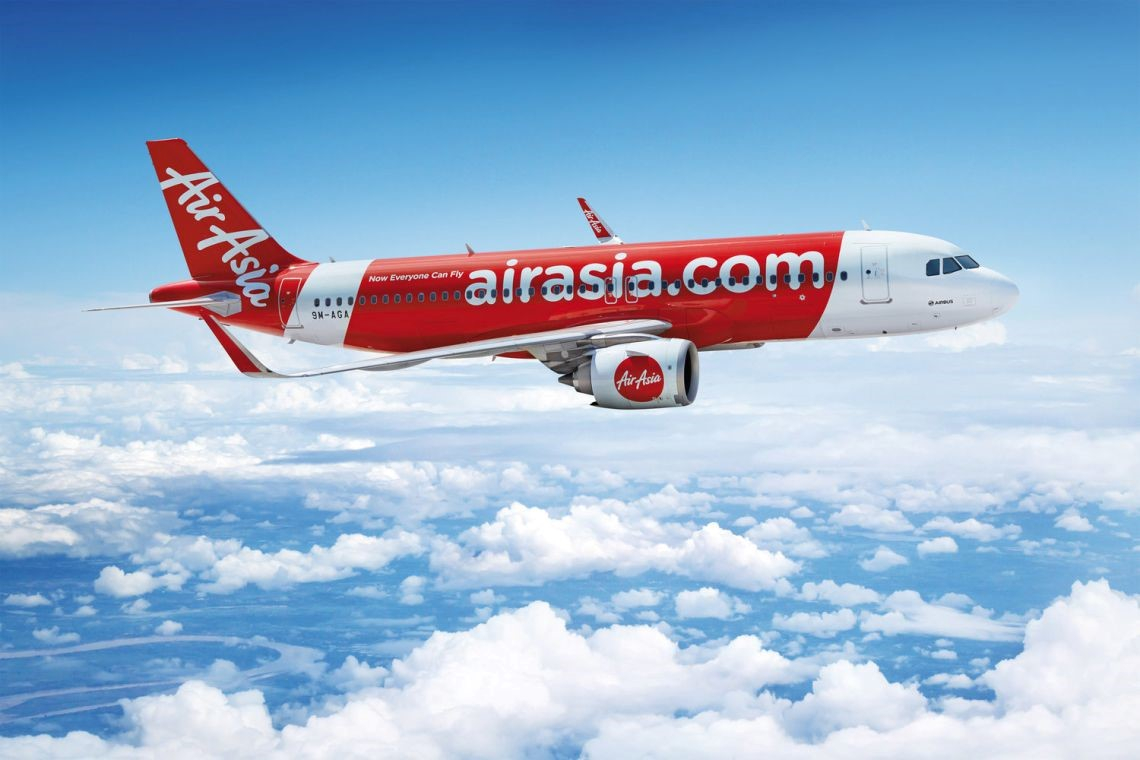
The parent company of the iconic Air Asia’s non aviation business, Capital A, has been on the receiving end of an arbitral lawsuit in Singapore enabled by a litigation funder. Image Source: Flytrippers
The Singapore High Court has moved to seize stakes in BigPay and Teleport held by Capital A, the Malaysian company led by Tony Fernandes and best known as the parent of AirAsia’s non-aviation businesses. This move is part of the enforcement of a December 2024 ruling, when a Singapore arbitration tribunal ordered AirAsia Digital, now part of Capital A portfolio, to purchase the claimants Christopher Davison and Navin Rajagopalan’ stake in BigPay for US$14.74 million.
The legal battle stems from claims that shareholder and investment agreements were improperly terminated, with the claimants also alleging minority shareholder oppression under Singapore law.
Capital A only recently emerged from a previous period of financial troubles. The Singapore court’s action, aimed at enforcing the US$14.74 million arbitration award, creates a fresh headache for Capital A.
At first glance, the case appears to be another example of arbitration imposing a heavy cost on a Malaysian company. But the more intriguing and concerning aspect once again lies with the role of third-party litigation funding.
The claimants were backed by a litigation funder, and reports indicate that almost none of the US$14.7 million award ultimately remained with them. According to Legal Funding Journal, nearly the entire amount was required to repay the funder.
The fact that the amount was only roughly 10% of the minimum compensation they had initially requested completes the puzzle: there was a significant initial demand that would have provided for the damages sought by claimants and the ravenous financial interests of the litigation funder. Whilst the court was sympathetic to the claimants’ cause, that understanding did not extend to the financial incentives inflated by the funder. Once the small award was announced, the disappointed funder took their dues at the significant expense of the claimants.
“The claimants were backed by a litigation funder, and reports indicate that almost none of the US$14.7 million award ultimately remained with them.”
Updated headlines for free, straight to your inbox—no noise, just facts.
We collect your email only to send you updates. No third-party access. Ever. Your privacy matters. Read our Privacy Policy for full details.
That outcome reflects a criticism frequently leveled at third-party litigation funding (TPLF): that the financial return of the funder becomes the dominant priority. If the largest share of the recovery goes elsewhere, questions naturally follow. Are these cases primarily about delivering justice to claimants, or have courtrooms become commercial opportunities for outside investors?
Critics have long argued this is not an isolated example. The issue has repeatedly surfaced in connection with Therium, the litigation funder that also backed the Sulu arbitration.
In the UK subpostmasters case, Therium reportedly spent £20 million financing the litigation and is said to have only broken even from the eventual settlement. Yet the claimants themselves reportedly received around £20,000 each on average despite years of financial hardship, bankruptcies, and personal suffering.
The financial details surrounding Therium’s involvement in the Sulu arbitration remain less clear. However, reports suggest the funder invested a similar £20 million and ultimately lost the entire amount when the case was thrown out in December 2025 by the Paris Court of Appeal. Critics have long speculated that repeated attempts to revive the arbitration were driven less by the claimants themselves and more by efforts to recover the funder’s losses.
Separate reports, including by the US Chamber of Commerce, has directly levied claims that Therium has a history of exerting undue influence on the lawyers of claimants and the ability of said claimants and lawyers to settle cases in their own interests.
The Capital A dispute appears to fit the same pattern. With the funder reportedly taking the lion’s share of the award, some may wonder what practical benefit remained for BigPay shareholders Davison and Rajagopalan in pursuing the case.
The claimants have since argued that Capital A, as the losing party, should also bear the cost of engaging the litigation funder as part of legal expenses. On that point, however, the Singapore court drew a firm distinction. If parties choose to use litigation funding, the associated risks and costs remain their responsibility.
The episode offers a stark reminder for anyone considering TPLF. Litigation funding may provide access to legal action, but it comes at a significant price. Once the funder takes its share, claimants must ask whether the remaining recovery justifies the effort and risk. More broadly, it raises the question of whether some cases are pursued primarily for the benefit of claimants or as investment opportunities for third parties.
“If parties choose to use litigation funding, the associated risks and costs remain their responsibility.”
There is also a wider warning for the region. Despite the final collapse of the Sulu arbitration in December 2025 and Malaysia’s efforts to regulate third-party litigation funding domestically, national measures alone may not be enough to guard against their questionable practices. Litigation funders operate across borders and are likely to continue targeting arbitration disputes in major commercial hubs, whether in Europe, Singapore, or elsewhere.
As the Capital A case demonstrates, the ability to pursue overseas assets means that the reach of litigation funding extends well beyond any single jurisdiction. For critics, that underscores the need for a more coordinated international response.
REFERENCES
Bloomberg Law. (2025, April 22). Litigation funder Therium conducts layoffs amid upcoming shift. https://news.bloomberglaw.com
Burford Capital. (2026, March 30). Burford Capital further statement on YPF appeal decision. https://investors.burfordcapital.com
Business Wire. (2026, June 3). Rocade Capital accelerates market leadership in legal finance with strategic acquisition of Law Finance Group. https://www.businesswire.com
Choy, N. Y. (2026, June 9). Singapore court moves to seize Capital A’s shares in BigPay and Teleport. The Edge Malaysia. https://theedgemalaysia.com
Hyde, J. (2025, April 23). Jobs lost as high-profile lit funder restructures. The Law Gazette. https://www.lawgazette.co.uk
KnowSulu. (2025, November 12). Sulu claimants’ desperate $18 billion claim against Spain thrown out. https://know-sulu.ph
Legal Funding Journal. (2025, June 11). Therium taps Fortress to manage caseload amid restructuring. https://legalfundingjournal.com
Legal Funding Journal. (2025, December 4). Post discussing the Capital A/BigPay arbitration award and litigation funding [LinkedIn post]. LinkedIn. https://www.linkedin.com
Perry, S. (2026, June 10). Malaysian airline’s assets seized in Singapore. Global Arbitration Review. https://globalarbitrationreview.com
Therium. (n.d.). Therium Capital Advisors. Therium. https://www.therium.com
Therium. (2025, October 6). Therium Capital Advisors launched to provide litigation finance advisory services. Therium (News, Insights & Events). https://www.therium.com
U.S. Chamber of Commerce Institute for Legal Reform. (2022, November). ILR Briefly: A new threat: The national security risk of third-party litigation funding. Retrieved from https://instituteforlegalreform.com

KnowSulu is your trusted source for verified facts, news, and legal insights about the Sulu region. Committed to integrity, our mission is to empower the people of Sulu by providing accurate, transparent, and reliable information that matters.
