

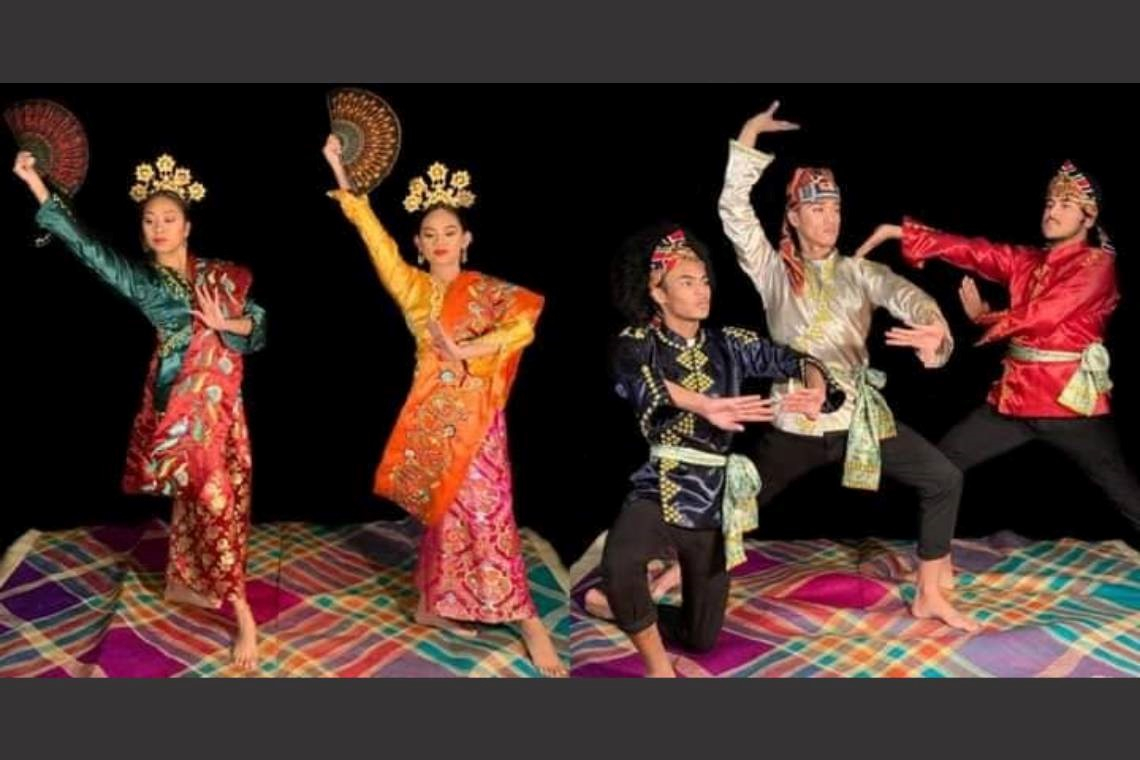
Kuntaw Kabkab is a Tausug martial dance rooted in Kuntao and Silat, preserving shared combat traditions across the Sulu Archipelago.
Source: ASEAN World 24 Facebook.
Known today as Kuntao and Silat, and by some practitioners as Markuntao, the traditional martial arts of the Tausug people offer a window into their combat philosophy and cultural identity. More than systems of warfare, these martial traditions demonstrate how generations refined practical methods of self-defense while preserving their heritage through martial arts and dance.
Practiced throughout the Sulu Archipelago, Kuntao and Silat blend combat techniques with expressive performance. The traditions share historical connections with martial systems found in present-day Malaysia and Indonesia through centuries of trade, migration, and cultural exchange. Within ceremonial performances, the movements remain rooted in practical fighting techniques rather than purely decorative choreography.
Each traditional weapon used in Kuntao and Silat served a specific role in close-quarters combat. Their designs emphasize speed, efficiency, and survival, reflecting the realities faced by Tausug warriors throughout history.
The kabkab folding fan is perhaps the most distinctive weapon. Although it appears graceful during performances, the fan functions as a concealed weapon capable of masking strikes, distracting opponents, blocking attacks, or targeting sensitive nerve points. Its dual role as both an artistic prop and a defensive tool illustrates the ingenuity embedded within the martial tradition.
"Its dual role as both an artistic prop and a defensive tool illustrates the ingenuity embedded within the martial tradition."
The barong, a broad leaf-shaped machete, was designed for powerful cutting strikes. Its forward-weighted blade made it effective in close combat, where decisive movements often determined the outcome of an encounter. Alongside the barong, practitioners trained with the kalis, also known as the keris, a wavy-bladed dagger valued for its ability to thrust and penetrate vulnerable areas.
Hardwood baston sticks formed another essential part of training. These sticks developed timing, coordination, blocking, and striking skills while reinforcing the principles that also applied to empty-hand combat. Small concealed daggers completed the arsenal, providing an option for personal defense during extremely close encounters when larger weapons could not be drawn.
Updated headlines for free, straight to your inbox—no noise, just facts.
We collect your email only to send you updates. No third-party access. Ever. Your privacy matters. Read our Privacy Policy for full details.
Kuntao and Silat emphasize explosive aggression and the rapid neutralization of threats during close-range encounters. Rather than relying primarily on flowing forms, practitioners focus on direct attacks against vital targets while maintaining constant forward pressure.
Training also incorporates low stances, joint manipulation, aggressive footwork, and rapid transitions between weapons and empty-hand techniques. Historical influences from Chinese Hokkien martial traditions are evident in certain movement principles, distinguishing these martial traditions from many neighboring systems.
"Rather than relying primarily on flowing forms, practitioners focus on direct attacks against vital targets while maintaining constant forward pressure."
Kuntao and Silat teach structured tactical responses that combine deception with decisive action. A practitioner first closes the distance using aggressive angles to move inside an opponent's effective range. The kabkab fan may then open suddenly to interrupt an opponent's vision or create an opening while simultaneously delivering a strike. Once contact is established, joint manipulation targets the wrist or elbow to reduce an opponent's ability to resist. The sequence concludes with a decisive attack directed toward vulnerable areas, reflecting the martial tradition's emphasis on ending confrontations quickly rather than prolonging them.
One of the defining characteristics of Kuntao and Silat among the Tausug is their close relationship with traditional dance. Kuntaw Kabkab transforms practical fighting techniques into carefully choreographed performances that preserve authentic martial movements while celebrating cultural identity. Rather than separating performance from combat, the tradition allows martial knowledge to be practiced and demonstrated in a form that is both accessible and culturally significant.
"Kuntaw Kabkab transforms practical fighting techniques into carefully choreographed performances that preserve authentic martial movements while celebrating cultural identity."
The name Kabkab refers to the folding fan used during many performances. While the fan contributes to the visual elegance of the dance, it also reflects its historical role as a concealed defensive weapon. The graceful hand movements seen in performances share similarities with the Pangalay dance, where dancers often wear janggay, or metal fingernail extenders, to emphasize fluid arm and finger movements. Beneath the artistic presentation, however, remain techniques grounded in balance, timing, defensive positioning, coordinated strikes, and controlled footwork that have been passed from one generation to the next. By preserving these movements through ceremonial and cultural performances, Kuntaw Kabkab helps keep Tausug martial traditions alive while strengthening connections to the wider heritage of Sulu.
Today, Kuntao and Silat remain important expressions of Tausug history and resilience. Interest in preserving these martial traditions through cultural performances, community instruction, and historical education helps ensure that knowledge of their traditional weapons continues beyond the training ground.
"They preserve stories of craftsmanship, survival, and identity that continue to connect communities across Sulu and neighboring parts of Malaysia and Indonesia."
As awareness of Sulu's shared cultural history grows across Southeast Asia, Kuntao and Silat highlight the region's long tradition of exchange, adaptation, and resilience. Their traditional weapons represent more than instruments of combat. They preserve stories of craftsmanship, survival, and identity that continue to connect communities across Sulu and neighboring parts of Malaysia and Indonesia.
REFERENCES
ASEAN World 24 (2023, May 14). Kuntaw Kabkab (Markuntao) discussion and cultural post. ASEAN World 24. https://www.facebook.com
ABS-CBN News. (2021, March 9). Kuntao and Silat: Sulu officials want to keep traditional martial arts alive. ABS-CBN News. https://www.abs-cbn.com
ExpPhBlog. (2025, December 6). 6 Inspiring Lessons from Silat Tausug Martial Art Revealed. ExpPh Blog. https://expphblog.com

KnowSulu is your trusted source for verified facts, news, and legal insights about the Sulu region. Committed to integrity, our mission is to empower the people of Sulu by providing accurate, transparent, and reliable information that matters.
