

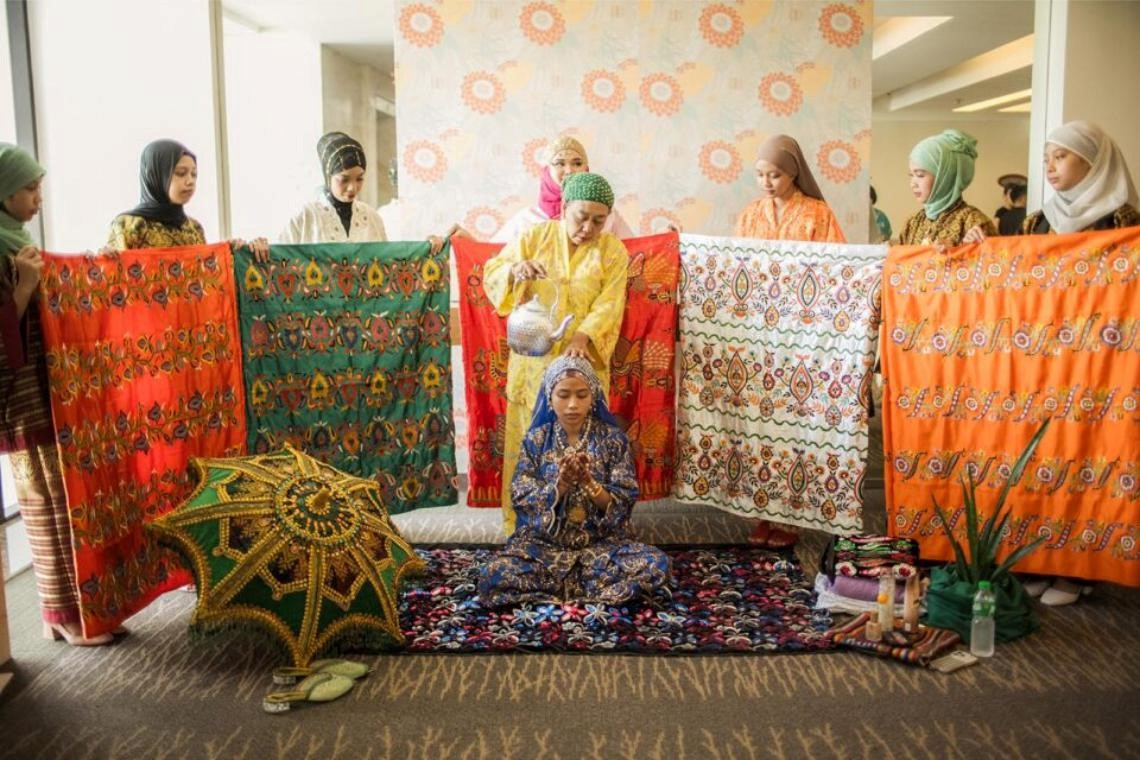
A Tausug wedding shows how traditional clothing can preserve cultural identity, carrying the memory of generations through periods of colonial rule and into modern Sulu. Source: Vogue.
She wore a traditional Batawi made by Indigenous designer Mohammedjan Jahuran, decorated with thousands of hand-placed Tambuku brass buttons, alongside heirloom jewelry, gold medallions, and henna.
The choice reflected a tradition passed through generations. Sajili remembered her grandmother, who regularly wore the Sablay, another traditional Tausug garment. When Sajili asked why she always wore it, her grandmother's answer was simple: “Sablay is our identity.”
That exchange captures why Tausug clothing can mean more than ceremonial dress. Worn across generations, these garments become living reminders of where a people come from and a visible way of keeping cultural identity alive despite centuries of colonialism and political upheaval.
The significance of Tausug clothing can be seen in the relationship between everyday dress and cultural identity. Traditional garments such as the Sablay and Batawi have continued to distinguish Tausug dress, with the Batawi traditionally associated with formal occasions and elaborate craftsmanship.
Clothing is one of the most visible ways a community can preserve its identity. Language, oral histories, customs, and family traditions can be weakened when generations are separated from them, but clothing can remain tangible. It can be made, inherited, worn, photographed, and taught to children.
"In this sense, traditional Tausug clothing represents continuity."
In this sense, traditional Tausug clothing represents continuity. Its continued use means that cultural forms created and refined by earlier generations do not have to remain in the past. They can remain part of ordinary life and important milestones, including weddings.
The history surrounding Tausug identity gives this continuity an additional weight. The Tausug experienced centuries of conflict with Spanish colonial forces, followed by American colonial rule. The 1906 violence at Bud Dajo remains an important part of the history of Moro resistance and is remembered as a massacre in which many Tausug and other Moro people were killed.
Against that history, preserving traditional forms of dress can be understood as a quiet form of cultural survival. It does not require a speech or political declaration. A person simply wearing a Sablay or Batawi makes their cultural identity visible.
"Keeping distinctive forms of dress alive therefore allowed communities to retain a visible sense of themselves rather than allowing outside definitions to become the only version of their history."
This is particularly important because colonialism did not only involve military campaigns or political control. Colonial societies also frequently imposed their own ideas about civilization, modernity, and which cultures deserved recognition. Keeping distinctive forms of dress alive therefore allowed communities to retain a visible sense of themselves rather than allowing outside definitions to become the only version of their history.
Updated headlines for free, straight to your inbox—no noise, just facts.
We collect your email only to send you updates. No third-party access. Ever. Your privacy matters. Read our Privacy Policy for full details.
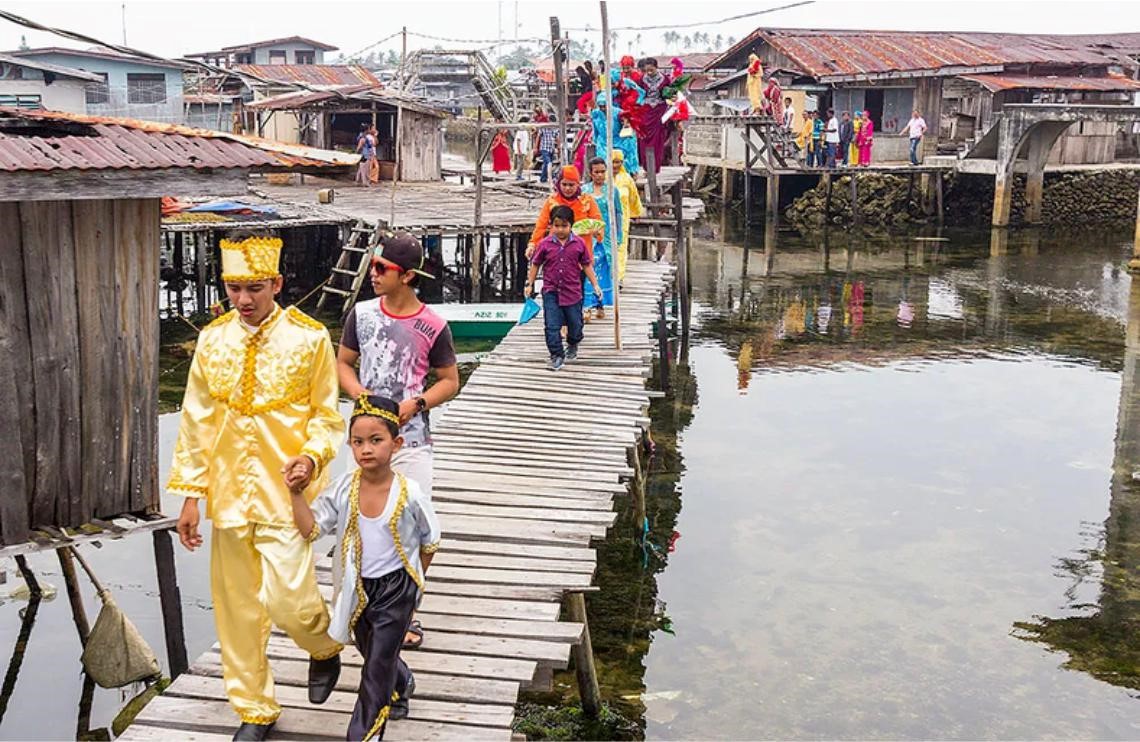
A groom walks to the brides house to pick her up for the ceremony dressed in traditional clothing. Source: Langyaw.
The clothing itself also carries evidence of a sophisticated artistic tradition. Elaborate embroidery, gold buttons, jewelry, weaving, and other forms of ornamentation demonstrate that Tausug cultural expression has long included its own ideas of beauty, craftsmanship, and status. These are not simply remnants of a disappearing past. They are traditions that can continue to evolve while retaining recognizable links to earlier generations.
For people in Sulu and the wider Tausug community, this kind of cultural continuity matters at a time when identity exists across increasingly connected and changing societies. Cultural traditions provide links that can remain meaningful even as people move between places, generations, and modern ways of life.
Traditional clothing offers one particularly visible link. Wearing it at a wedding, family gathering, or public celebration allows younger Tausug people to participate in a culture that they might otherwise encounter mainly through stories or historical accounts.
"In Sulu, where history has repeatedly been shaped by forces from beyond the archipelago, continuing to wear those traditions offers a reminder that identity can survive change without disappearing."
For generations, the garments have carried more than color, embroidery, gold, and craftsmanship. They have carried a sense of belonging. In Sulu, where history has repeatedly been shaped by forces from beyond the archipelago, continuing to wear those traditions offers a reminder that identity can survive change without disappearing.
REFERENCES
Lil Pink. (2012, July 23). Embracing the Tausug fashion and fad. Lil Pink. https://www.lilpink.info
Vogue Philippines. (2025, February 14). In a Tausug wedding, love and culture are celebrated. Vogue Philippines. https://vogue.ph
We Love Asean. (2025, September 19). Tausug wedding honors cultural heritage and love - Facebook. We Love Asean. https://www.facebook.com

KnowSulu is your trusted source for verified facts, news, and legal insights about the Sulu region. Committed to integrity, our mission is to empower the people of Sulu by providing accurate, transparent, and reliable information that matters.
