

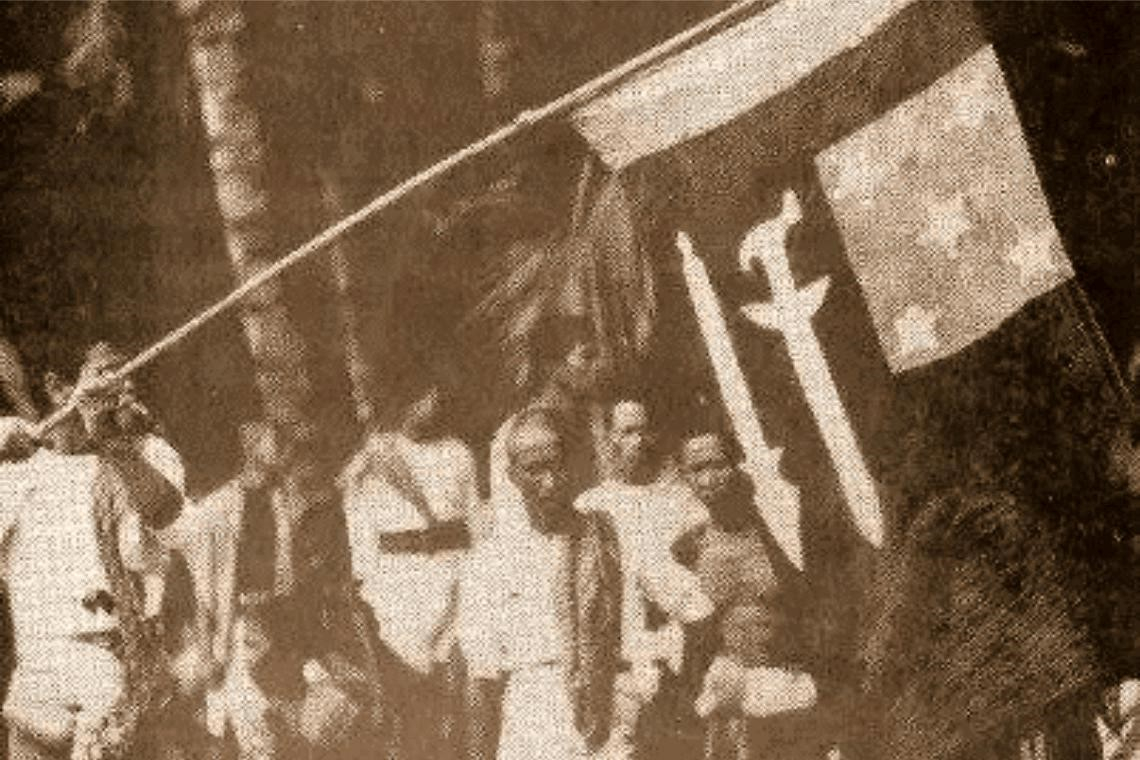
The Sultanate of Sulu war flag reflects the courage, faith, and identity of Tausug warriors, with its symbols remaining a source of cultural pride today. Source: WadoodHistory
Between 1899 and 1913, the Philippine-American War expanded into the southern Philippines, where many inhabitants of the Sulu Archipelago rejected American rule and continued to profess loyalty to the Sultanate of Sulu. Unlike many regions that quickly came under American administration, Tausug warriors and other Moro communities mounted determined resistance, defending their homeland through deeply rooted traditions of leadership, faith, and honor.
Among the most enduring symbols of that period was the Panji sin Kasultanan Sūg, the Sultanate of Sulu war flag, which embodied far more than military defiance. It represented a centuries-old civilization whose identity had been shaped by maritime power, Islamic tradition, and an enduring warrior culture.
The Sultanate of Sulu, established in the fifteenth century, once exercised authority across the Sulu Archipelago and parts of Mindanao, Palawan, Sabah, Borneo, and Kalimantan. At its height, it controlled important sea routes throughout the Sulu Sea and served as both a political and religious authority for its subjects. As colonial powers expanded into Southeast Asia, the sultanate gradually lost territory, first to European empires and later to the United States following the Spanish-American War.
"Rather than representing a national flag in the modern sense, the banner served as a rallying point for communities defending their homeland."
During the conflict with American forces, Tausug and other Moro fighters carried distinctive war flags that differed from ordinary banners of state. While historians believe the design may have been loosely influenced by the American Stars and Stripes, the symbolism reflected local traditions rather than foreign ideals. Most surviving examples feature a bright red field with a dark blue, almost black, canton displaying five stars alongside traditional weapons and, in some versions, Islamic symbols such as the crescent and star.
Rather than representing a national flag in the modern sense, the banner served as a rallying point for communities defending their homeland. Many of these flags later became prized trophies collected by American soldiers, making surviving examples valuable historical artifacts today.
Every element of the Panji carried meaning for Tausug warriors. The most recognizable feature was the kris, or kalis, the distinctive wavy sword long associated with Moro nobility and martial skill. More than a weapon, the kris represented courage, honor, and the responsibility of leadership. Its prominent place on the flag reflected the ideals expected of those who defended the sultanate.
Updated headlines for free, straight to your inbox—no noise, just facts.
We collect your email only to send you updates. No third-party access. Ever. Your privacy matters. Read our Privacy Policy for full details.
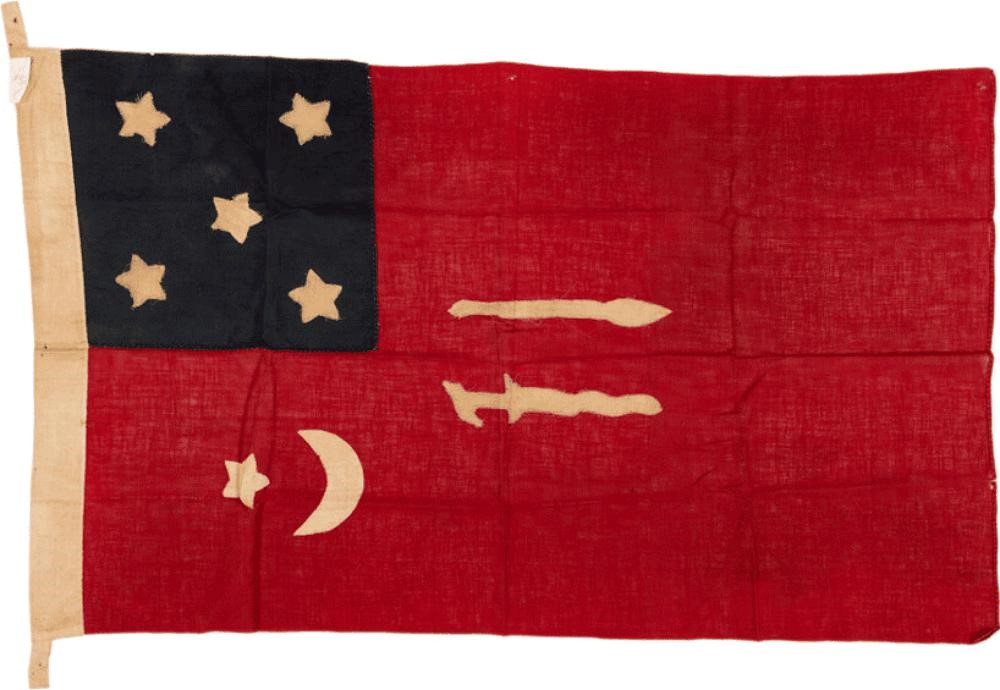
The Sultanate of Sulu's war flag stood as a powerful symbol of resistance, identity, and faith during one of the most turbulent chapters in Philippine history. Source: Heritage Auctions.
Alongside the kris stood the budjak, or spear, positioned vertically on many versions of the flag. The spear symbolized steadfastness, discipline, and the authority of male leadership within traditional Tausug society. Together, the kris and budjak represented complementary qualities of the warrior, combining courage with resolve.
"Every element of the Panji carried meaning for Tausug warriors."
The five stars displayed in the canton were understood to symbolize the principal territories united under the Sultanate of Sulu, including the Sulu Archipelago, Basilan, Palawan, Sabah, and parts of Kalimantan. Their arrangement reflected the idea that diverse datuships and administrative regions remained connected under the authority of the sultan.
The red background further reinforced the banner's message. Throughout Moro history, red became closely associated with sacrifice, bravery, and the willingness to defend one's community. Variations of the flag sometimes included the Islamic crescent and star, emphasizing that spiritual devotion remained inseparable from political and military identity.
The symbolism of the war flag cannot be separated from the Tausug understanding of courage and faith. Historical accounts describe the tradition of parrangsabil, an act of religious martyrdom undertaken with complete trust in Allah's will. Participants believed that their fate rested entirely in divine hands after receiving blessings from respected religious leaders, known as Tuan Sharif or Tuan Imam.
This belief shaped the Tausug concept of di' pag-ukun, or invulnerability. Rather than suggesting physical immunity, it reflected complete confidence that life and death ultimately rested with Allah. Honor, or maruah, occupied an equally central place in Tausug society, with preserving personal dignity often considered more important than survival itself.
"They became cultural symbols expressing courage, discipline, and devotion, values that were visibly woven into the design of the Sultanate's war flag."
The principal weapons carried by Tausug warriors, including the kris, barung, and budjak, therefore represented more than practical tools of war. They became cultural symbols expressing courage, discipline, and devotion, values that were visibly woven into the design of the Sultanate's war flag.
Today, surviving examples of the Sultanate of Sulu war flag offer more than a glimpse into military history. They preserve the visual language through which Tausug communities expressed sovereignty, unity, and resilience during a period of profound political change.
"Across the Sulu Archipelago, traditional weapons, stories of ancestral courage, and symbols associated with the sultanate continue to occupy an important place in Tausug cultural memory."
Across the Sulu Archipelago, traditional weapons, stories of ancestral courage, and symbols associated with the sultanate continue to occupy an important place in Tausug cultural memory. The Panji sin Kasultanan Sūg remains a reminder that heritage is preserved not only through written history, but also through the symbols that communities choose to carry across generations. In a region where identity continues to shape cultural and historical discussions, the flag stands as an enduring emblem of the pride, resilience, and traditions that continue to define the Tausug people.
REFERENCES
Facts and Details. (2026, January). Ethnic groups in the Sulu Islands: Tausug, Yakan and the Sulu Sultanate. Facts and Details. https://factsanddetails.com
Heritage Auctions. (2022). Sultanate of Sulu-Moro flag-Philippine-American War-Lt. Furlong & Capt. Buttner. Heritage Auctions. https://historical.ha.com
Jolo, N. (n.d.). Tausug invulnerability. Jolo, N. https://www.academia.edu
Samsal, Y. A. D., Jr., Isahak, A. H., & Tarsum, N. J. (2024). Battle of Bud-Dajo: Moro Tausug-American War 1906 Sulu Philippines. International Journal of Research in Engineering, Science and Management, 7(5), 195-199. https://journal.ijresm.com
The Sulu Tawi-Tawi Cultural and Historical Society. (2021, January 18). A Sulu flag at a Heritage Auctions in the US - Facebook. The Sulu Tawi-Tawi Cultural and Historical Society. https://www.facebook.com

KnowSulu is your trusted source for verified facts, news, and legal insights about the Sulu region. Committed to integrity, our mission is to empower the people of Sulu by providing accurate, transparent, and reliable information that matters.
