

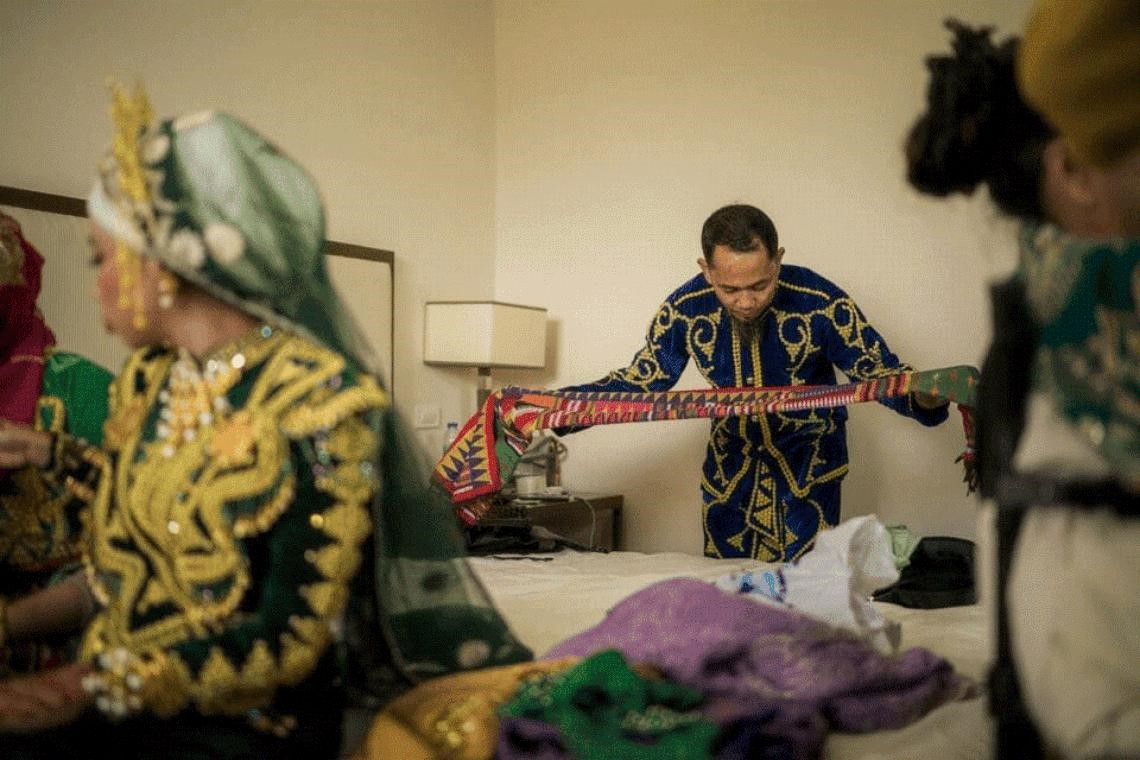
The father of the bride in a Tausug wedding is preparing his Pis Syabit. Source: Vogue.
Darhata Sawabi devoted her life to protecting one of the Tausug people's most treasured traditions, earning the Philippines' prestigious National Living Treasures Award, in 2004. Born in Parang, Sulu, Sawabi became nationally recognized for preserving the centuries-old art of Pis Siyabit weaving at a time when the craft faced the pressures of conflict and changing livelihoods. Although she passed away in 2005, her greatest legacy is not simply the award she received, but the survival of a weaving tradition that continues to define Tausug cultural identity today.
Pis Siyabit is a traditional hand-woven square cloth created by the Tausug people of the Sulu Archipelago. Instantly recognizable through its striking geometric designs and vibrant combinations of red, yellow, orange, and black, the textile has long been an important part of Tausug life. It is traditionally worn as a head covering or shoulder adornment and is also incorporated into ceremonial clothing and cultural celebrations.
"Every completed textile represents knowledge that has been passed from one generation of weavers to the next, preserving techniques that have remained largely unchanged for centuries."
The name reflects both the finished design and the method used to create it. "Pis" refers to the geometric patterns that distinguish the cloth, while "siyabit" describes the hook weaving technique that makes those intricate designs possible. Every completed textile represents knowledge that has been passed from one generation of weavers to the next, preserving techniques that have remained largely unchanged for centuries.
Producing a single Pis Siyabit is a slow and highly specialized process. Before weaving can even begin, artisans spend approximately three days preparing the warp by carefully stretching black and red threads across a frame made from banana and bamboo. This foundation determines the accuracy of every pattern that follows.
Once the loom is prepared, weaving the cloth can take as long as three months. Each thread is placed by hand to create symmetrical geometric designs that require exceptional concentration and precision. A single mistake can disrupt the pattern, making patience and experience just as important as technical skill.
"Traditional designs include patterns inspired by houses, fish, dragonflies, and other elements that reflect the natural surroundings and cultural traditions of the Tausug people."
The finished cloth measures approximately 39 by 40 inches, yet within that relatively small space are dozens of carefully woven motifs that demonstrate remarkable craftsmanship. Traditional designs include patterns inspired by houses, fish, dragonflies, and other elements that reflect the natural surroundings and cultural traditions of the Tausug people.
Updated headlines for free, straight to your inbox—no noise, just facts.
We collect your email only to send you updates. No third-party access. Ever. Your privacy matters. Read our Privacy Policy for full details.
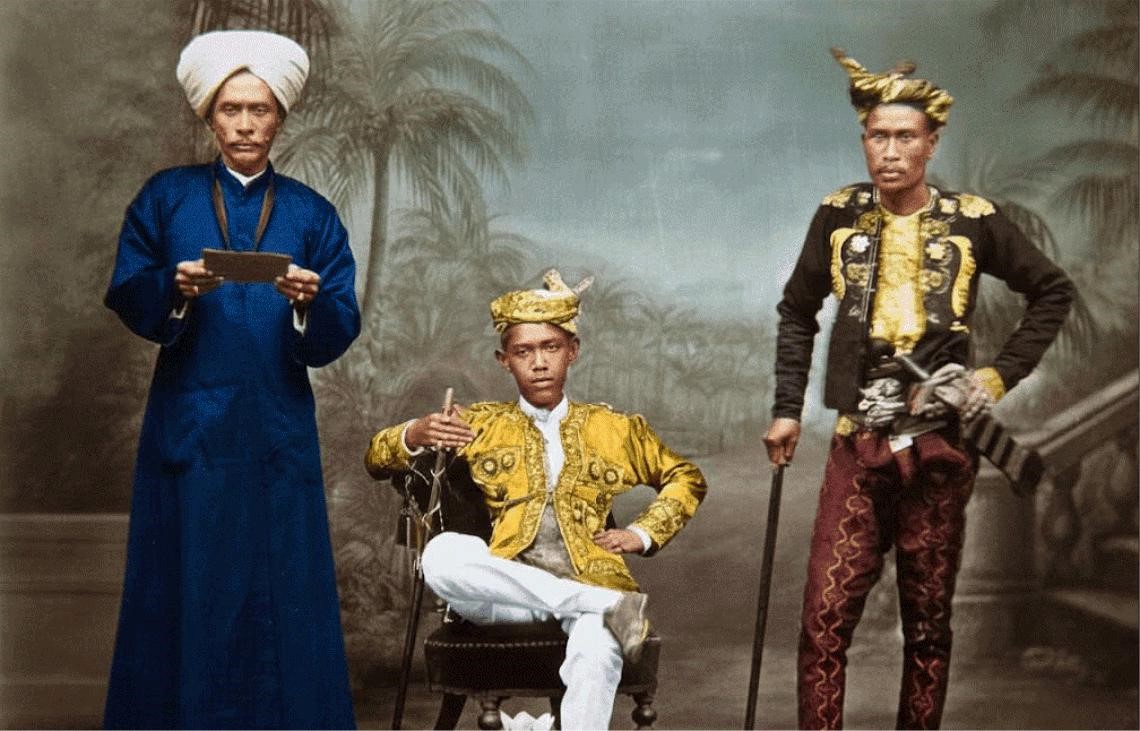
The intricate art of Pis Siyabit as a headscarve continues to preserve Tausug identity, carrying centuries of tradition, craftsmanship, and cultural pride across Sulu. Source: The Sulu Tawi-Tawi Cultural and Historical Society.
For the Tausug, Pis Siyabit represents far more than a beautifully woven textile. It serves as a visible expression of heritage, community, and identity. Worn during important occasions, it symbolizes continuity between generations while reflecting the artistic traditions that distinguish the Tausug from other ethnolinguistic groups in the Philippines.
The weaving tradition has historically been passed from mothers to daughters and from experienced artisans to younger apprentices. This transfer of knowledge preserves not only the technical skills needed to produce the cloth but also the stories, meanings, and customs embedded within every design. Each woven piece becomes a record of cultural memory, linking present-day communities with their ancestors.
"Each woven piece becomes a record of cultural memory, linking present-day communities with their ancestors."
Because every Pis Siyabit is woven entirely by hand, no two pieces are exactly alike. Each textile reflects the individual skill of its maker while remaining faithful to patterns that have endured for generations.
Today, Pis Siyabit continues to be recognized as one of the most distinctive cultural traditions of the Bangsamoro region. The continued practice of weaving supports local artisans while helping preserve an important element of indigenous Filipino heritage. Recognition of master weavers such as Darhata Sawabi has also encouraged greater appreciation for traditional craftsmanship and the importance of passing these skills to future generations.
"Every woven cloth carries centuries of Tausug knowledge, ensuring that one of the Sulu Archipelago's most enduring cultural symbols remains alive for generations to come."
As Sulu continues to promote its rich cultural heritage alongside broader regional development, traditions such as Pis Siyabit offer a powerful reminder that identity is preserved not only through history books but also through the hands of artisans. Every woven cloth carries centuries of Tausug knowledge, ensuring that one of the Sulu Archipelago's most enduring cultural symbols remains alive for generations to come.
REFERENCES
Bangsamoro Information Office. (2026). Darhata Sawabi. Bangsamoro Information Office. https://bcpch.bangsamoro.gov.ph
Bangsamoro Information Office. (2024, March 31.). Threads of Resilience: Darhata Sawabi—Sulu's Pis Syabit Weaving Maestro, a National Treasure. Bangsamoro Information Office. https://bangsamoro.gov.ph
Know Sulu. (2026, July 08). Sulu Designer Earns Place on Philippine Team for Malaysia Fashion Festival, Bringing Bangsamoro Heritage to an International Stage. Know Sulu. https://know-sulu.ph

KnowSulu is your trusted source for verified facts, news, and legal insights about the Sulu region. Committed to integrity, our mission is to empower the people of Sulu by providing accurate, transparent, and reliable information that matters.
