

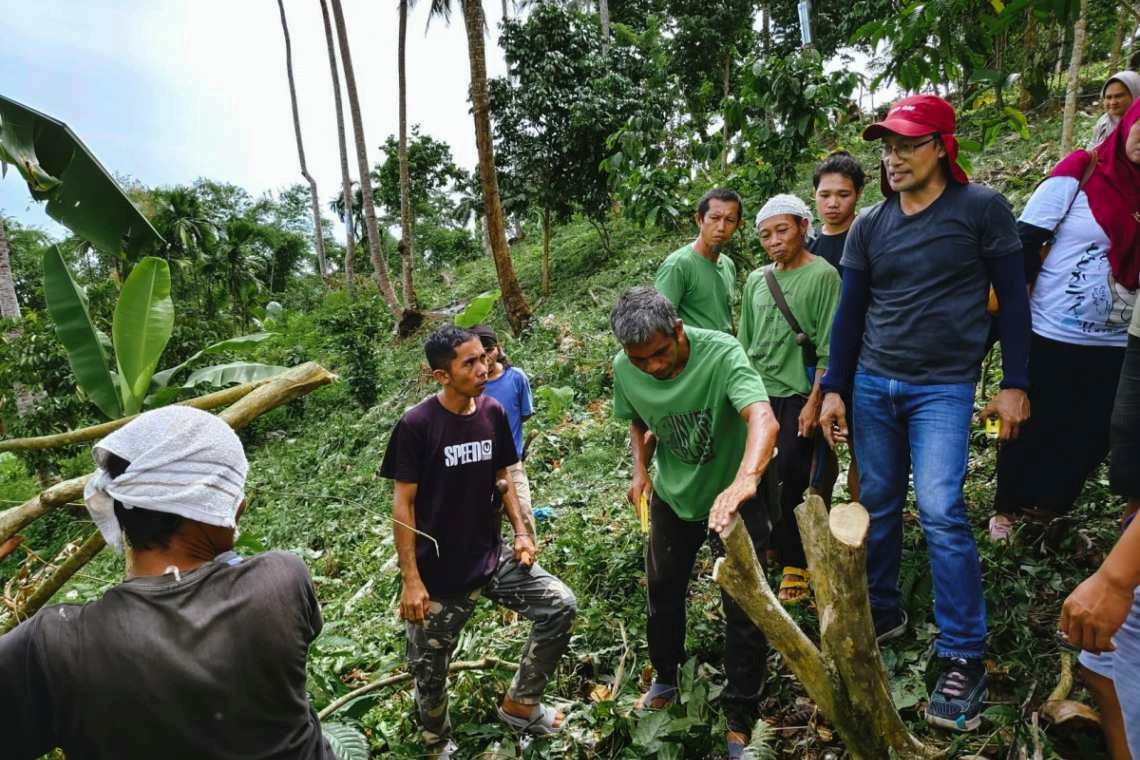
Kahawa Sug, Sulu's historic robusta coffee, is preserving Tausug culture while offering new opportunities for farmers, tourism, and heritage-based economic growth. Source: People in Need.
Long before specialty coffee became a global trend, the people of the Sulu Archipelago had already developed a distinct coffee culture centered on Kahawa Sug, also known as Sulu coffee. This single-origin robusta traces its roots to the mid-nineteenth century, when Prussian merchant mariner Herman Leopold Schuck introduced robusta coffee plants to Sulu after establishing close ties with Sultan Jamalul Alam of the Sulu Sultanate.
Schuck established a plantation of around 20,000 robusta trees in what is now Anuling, Patikul. Local farmers soon adopted the crop, and over time the coffee became known as Kahawa Sug, meaning "Coffee of Sulu." The name combines the Arabic word qahwah, meaning coffee, with Sug, the Tausug name for the Sulu Archipelago, which refers to its sea currents.
Unlike many commercial coffee varieties, Kahawa Sug developed alongside Tausug traditions, becoming part of everyday life rather than simply an agricultural product.
For generations, Kahawa Sug has been served alongside bangbang, traditional snacks, or latal, a communal platter filled with local dishes. The coffee is usually enjoyed black, allowing its naturally smooth yet bold flavor to stand on its own. One of its most recognizable customs involves serving the coffee with an extra empty cup. Drinkers gently pour the hot coffee back and forth between the two cups, cooling the beverage while releasing more of its aroma. Although simple, the ritual transforms drinking coffee into a shared social experience that reflects Tausug hospitality.
"Although simple, the ritual transforms drinking coffee into a shared social experience that reflects Tausug hospitality."
Traditional coffee houses known as kahawahan have long served as gathering places across Muslim communities in the southern Philippines. Cafes such as Dennis Coffee Garden continue to preserve these customs while introducing Kahawa Sug to visitors interested in Sulu's culinary heritage.
Updated headlines for free, straight to your inbox—no noise, just facts.
We collect your email only to send you updates. No third-party access. Ever. Your privacy matters. Read our Privacy Policy for full details.
Despite its long history, Kahawa Sug faces an uncertain future. The Slow Food movement has included it in its international Ark of Taste, recognizing it as a traditional food at risk of disappearing. New robusta varieties that produce higher yields are increasingly replacing heritage coffee trees, threatening a crop that has been cultivated in Sulu for more than 160 years.
Historically, much of Kahawa Sug was grown in family courtyards for household consumption before farmers began selling surplus beans to support their families and finance their children's education. Cooperatives in places such as Panamao have worked to improve processing techniques, while local leaders and organizations continue promoting the preservation of traditional cultivation methods.
"As security conditions have improved in many parts of Sulu, farmers have increasingly returned to their coffee farms, viewing Kahawa Sug as both an economic opportunity and a symbol of recovery."
Recent years have also brought renewed support for the industry. Government agencies, local cooperatives, and international development programs have helped coffee farmers strengthen production, improve quality, and connect with wider markets. As security conditions have improved in many parts of Sulu, farmers have increasingly returned to their coffee farms, viewing Kahawa Sug as both an economic opportunity and a symbol of recovery.
Growing international interest in heritage foods has created new opportunities for products like Kahawa Sug. Coffee enthusiasts increasingly seek single-origin beans with authentic cultural stories, and Sulu's coffee offers exactly that. Every cup connects consumers to a tradition that has survived colonial history, changing agricultural practices, and decades of regional challenges. The growing popularity of Kahawa Sug also highlights how cultural heritage can support local development. Tourism centered on traditional food, coffee, and indigenous craftsmanship offers communities another way to showcase the richness of Tausug culture while creating sustainable livelihoods.
"Every cup connects consumers to a tradition that has survived colonial history, changing agricultural practices, and decades of regional challenges."
As the Philippines continue to promote cultural tourism and local agricultural products, Kahawa Sug demonstrates how preserving traditional industries can strengthen regional identity. For Sulu, protecting its signature coffee is not only about safeguarding an heirloom crop but also about reinforcing a heritage that continues to shape the region's cultural and economic future.
REFERENCES
International Organization for Migration. (2026, July 9). Brewing peace and prosperity through coffee farming in Southern Philippines. https://philippines.iom.int
People in Need. (2024, August 20). Brewing peace and reviving Sulu's coffee industry. https://www.peopleinneed.net
Philippine Coffee Board. (2020, January 3). Kahawa Sug of the Tausug. Philippine Coffee Board. https://philcoffeeboard.com

KnowSulu is your trusted source for verified facts, news, and legal insights about the Sulu region. Committed to integrity, our mission is to empower the people of Sulu by providing accurate, transparent, and reliable information that matters.
