

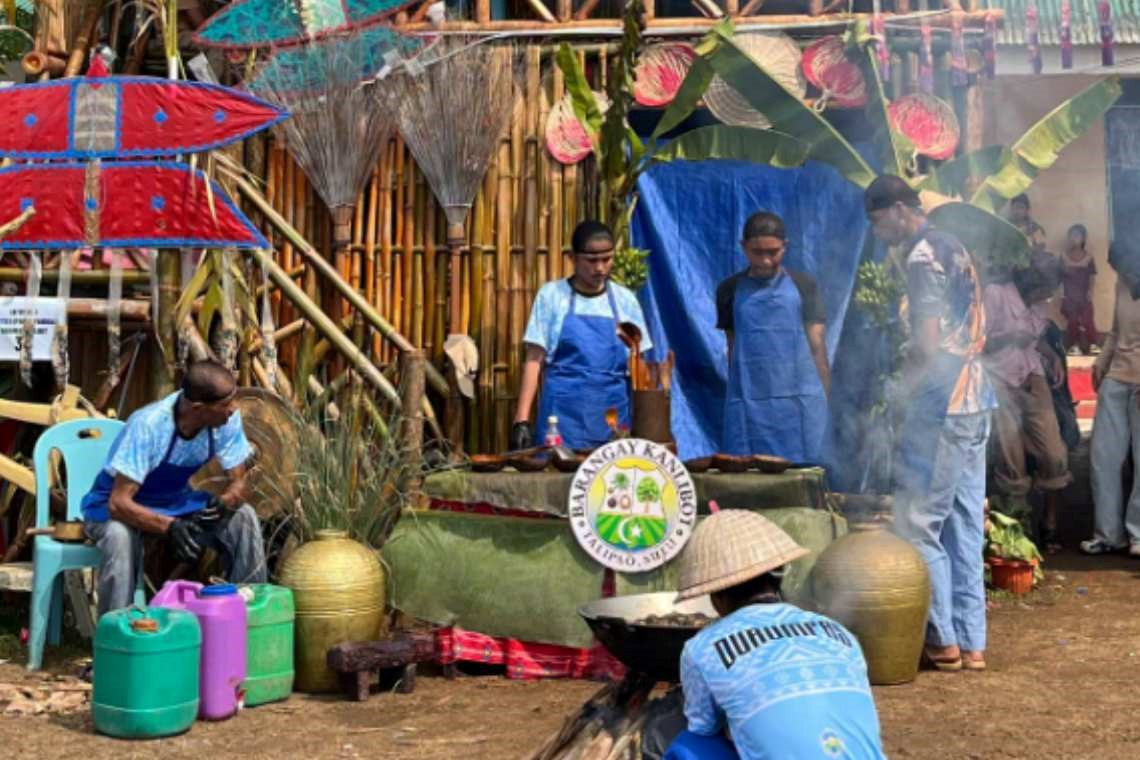
Talipao's Black Beef Soup Festival celebrates tiyula itum, a royal Tausug dish that continues to preserve culture, heritage, and community across Sulu. Source: Aylie Bíg Facebook
At first glance, tiyula itum surprises many visitors with its striking black broth. Yet beneath its unusual appearance lies one of the most celebrated dishes in the southern Philippines, treasured by Tausug communities across Sulu, Basilan, Tawi-Tawi, and Zamboanga. Long associated with the historic Sultanate of Sulu, the dish has earned the reputation of being "food for royalty."
The soup draws its distinctive color from syunug lahing, or burnt coconut meat that is ground into a fine paste or powder. Rather than overpowering the dish, the charred coconut gives the broth a rich smoky flavor that complements beef, lemongrass, ginger, turmeric, garlic, and chili. The result is a deeply comforting meal that has become inseparable from Tausug culture.
Although commonly translated as "black stew" or "black beef soup," tiyula itum represents much more than a recipe. It is traditionally prepared during weddings, Hari Raya celebrations, Ramadan gatherings, and other important family occasions, making it a centerpiece of both celebration and remembrance.
The Black Beef Soup Festival, locally known as the Tiyula' Itum Festival, was one of the highlights of the 69th Adlaw sin Talipao celebration, honoring one of the Tausug people's most iconic culinary traditions. Held as part of the municipality's founding anniversary festivities, the festival celebrates a dish that has been passed down through generations and remains central to Tausug identity.
The celebration featured a Black Beef Soup tasting competition that invited participants to present their own versions of the beloved dish. Local officials welcomed judges, guests, and visitors, while residents proudly showcased the flavors and cooking traditions that have made tiyula itum one of Sulu's best-known culinary treasures.
"They preserve traditional recipes, encourage younger generations to learn time-honored cooking methods, and introduce visitors to the rich cultural heritage of the Tausug people through one unforgettable meal."
Food festivals such as this do more than recognize talented cooks. They preserve traditional recipes, encourage younger generations to learn time-honored cooking methods, and introduce visitors to the rich cultural heritage of the Tausug people through one unforgettable meal.
Updated headlines for free, straight to your inbox—no noise, just facts.
We collect your email only to send you updates. No third-party access. Ever. Your privacy matters. Read our Privacy Policy for full details.
For many Tausug families, tiyula itum is inseparable from childhood memories and family gatherings. Community accounts describe large pots shared during kanduli celebrations, where relatives gathered to eat rice by hand while stories about ancestors and tradition were passed from one generation to the next. The smoky aroma of burnt coconut and spices became part of memories that extended far beyond the dining table.
"Those personal connections explain why many Tausug people describe the dish as an expression of identity rather than simply a favorite meal."
Others see the soup as the ultimate comfort food. Many families prepare it during Ramadan, while others associate it with warmth and care when loved ones are recovering from illness. Those personal connections explain why many Tausug people describe the dish as an expression of identity rather than simply a favorite meal.
Its popularity has also spread beyond Sulu. Restaurants in Zamboanga continue introducing new diners to the dish, while home cooks across Tausug communities preserve traditional preparation methods that distinguish authentic tiyula itum from modern adaptations.
Across Southeast Asia, traditional food is becoming an increasingly important part of cultural tourism and heritage preservation. Festivals centered on local cuisine allow communities to tell their own stories through recipes, customs, and shared experiences rather than through history books alone.
The Black Beef Soup Festival reflects that growing appreciation for living traditions. By celebrating a dish once served in the royal households of the Sultanate of Sulu, Talipao is also celebrating the resilience of Tausug culture and the importance of passing it to future generations.
"As regional interest in cultural tourism continues to grow, preserving iconic dishes such as this helps ensure that Sulu's heritage is recognized not only for its history, but also for the vibrant traditions that continue to bring people together around a shared table."
That message extends beyond the municipality itself. The Tausug people have long maintained cultural ties across Sulu, Basilan, Tawi-Tawi, and Zamboanga, and tiyula itum remains one of the traditions that connects those communities. As regional interest in cultural tourism continues to grow, preserving iconic dishes such as this helps ensure that Sulu's heritage is recognized not only for its history, but also for the vibrant traditions that continue to bring people together around a shared table.
REFERENCES
Arab News. (2022, October 22). In southern Philippines, special "black stew" offers taste of local Muslim culture. Arab News. https://www.arabnews.com
Ang Sarap. (2020, June 10). Tiyula Itum. Ang Sarap. https://www.angsarap.net
12-Lilac. (2026, July 27). Black Gold in a Bowl [Facebook post]. 12-Lilac. https://www.facebook.com

KnowSulu is your trusted source for verified facts, news, and legal insights about the Sulu region. Committed to integrity, our mission is to empower the people of Sulu by providing accurate, transparent, and reliable information that matters.
