

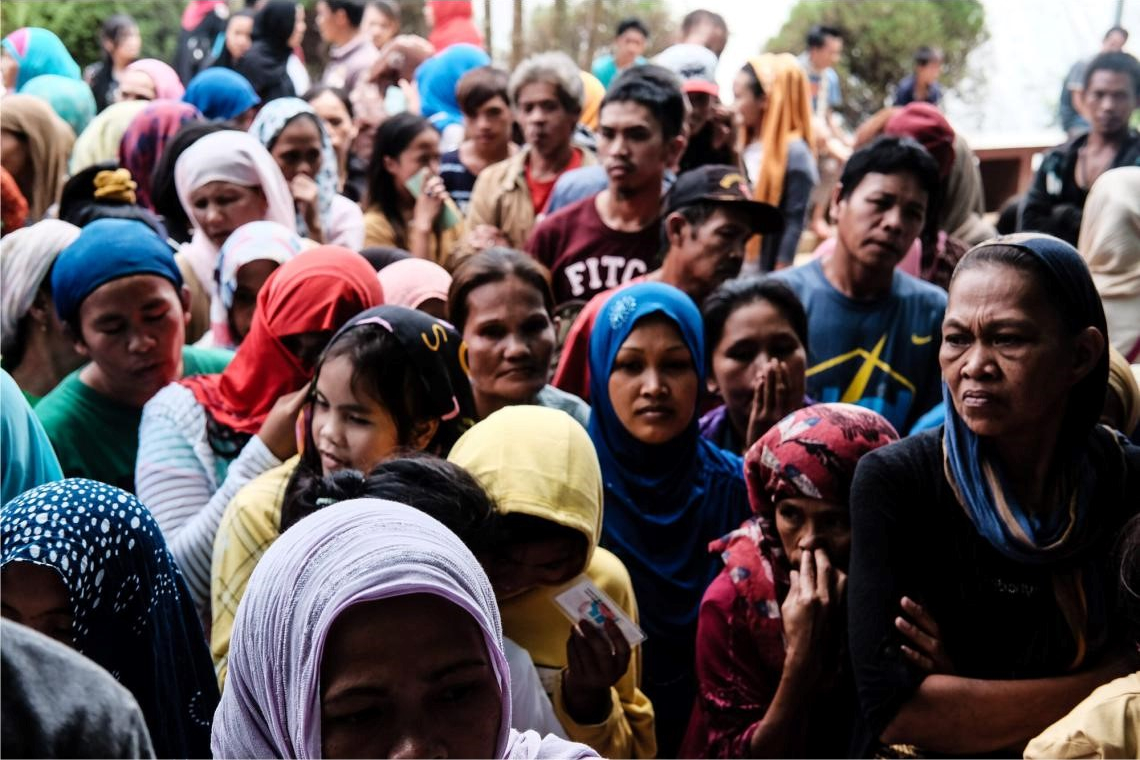
Tausug communities still confront stereotypes rooted in conflict, but culture, civic participation, and peace offer another way to define Sulu’s identity. Source: Rappler.
A stereotype shaped by centuries of warfare and later reinforced by modern militancy. That history is real, but reducing an entire ethnic community to its most violent episodes obscures the political, cultural and social forces that shaped them. The Tausug developed within the Sulu Archipelago, a maritime region with its own political traditions and long connections to Borneo and the wider Southeast Asian trading world. Colonial encounters with Spain and later the United States were marked by repeated armed resistance, helping establish a lasting image of the Tausug as unusually militant. Spanish attitudes toward Muslim communities were influenced by the wider religious conflict between Christianity and Islam, while later American military campaigns also shaped relations between Sulu and the Philippine state.
The violence of the twentieth century added new layers to that perception. Martial Law and the fighting in Sulu transformed relations between communities and the state, while the 1974 Battle of Jolo caused extensive destruction, displacement and civilian suffering. The Battle also contributed to continuing divisions between Christian and Muslim Tausug communities.
"Yet treating Abu Sayyaf as representative of Tausug society ignores the fact that extremist violence has also harmed local communities, disrupted livelihoods and contributed to displacement."
The emergence of Abu Sayyaf later created another powerful association between Sulu and terrorism. Yet treating Abu Sayyaf as representative of Tausug society ignores the fact that extremist violence has also harmed local communities, disrupted livelihoods and contributed to displacement. An armed organization and an ethnic population are not interchangeable categories.
The consequences of these perceptions can extend far beyond the islands. Muslim graduates from Mindanao said they encountered discrimination when seeking employment in Manila, including fears that employers would associate Muslim applicants with terrorism. The same reporting linked employment barriers to limited economic opportunities in Muslim-majority areas, creating additional pressure on young people to seek work elsewhere.
For Tausug people, this creates a difficult cycle. Conflict contributes to economic isolation, economic disadvantage can reinforce negative perceptions of the region, and those perceptions can then follow people when they leave Sulu for education, employment or business.
Updated headlines for free, straight to your inbox—no noise, just facts.
We collect your email only to send you updates. No third-party access. Ever. Your privacy matters. Read our Privacy Policy for full details.
The 2013 Lahad Datu incursion further strengthened the association between the Sulu name and armed territorial claims. An armed group identifying itself as the Royal Sulu Army entered Sabah and claimed the territory on behalf of the self-proclaimed Sultan of Sulu, Jamalul Kiram III. Malaysian forces eventually launched a major operation against the group, with casualties on both sides.
"Strengthening Sulu also means strengthening its institutions and political representation through peaceful and democratic means. Violence, whether driven by militancy, clan conflict, or political agendas, weakens the very communities and institutions that Sulu needs to develop."
The episode became part of a highly sensitive Malaysia-Philippines dispute, but it also had consequences for ordinary people whose identity was already associated with the conflict. When territorial arguments are expressed through armed action, the distinction between political claims, individual actors and the broader Tausug population can become blurred.
Strengthening Sulu also means strengthening its institutions and political representation through peaceful and democratic means. Violence, whether driven by militancy, clan conflict, or political agendas, weakens the very communities and institutions that Sulu needs to develop. The more sustainable path is to build capable local institutions, secure resources for essential services, and ensure that Tausug voices are represented effectively in Philippine political life.
That makes cultural preservation increasingly significant. Tausug language, oral traditions, music, food, history and craftsmanship provide ways for people to define their identity through something broader than conflict. Historical research itself has shown the value of Tausug survivor narratives and oral histories in challenging simplified accounts of the past.
"Peaceful civic and economic activity can similarly demonstrate that Sulu's future does not have to be defined by armed confrontation."
Peaceful civic and economic activity can similarly demonstrate that Sulu's future does not have to be defined by armed confrontation. Recent programs in Sulu have focused on farmers, fisherfolk, women and former MNLF communities, including livelihood equipment, agricultural inputs and other government services.
For Tausug communities, rejecting violence does not require abandoning history or cultural pride. It can instead mean refusing to allow armed groups or competing claims to become the primary lens through which an entire people are understood.
"In that sense, changing the outside image of the Tausug begins not by denying their past, but by making sure their future is not defined by it."
That distinction is increasingly important for Sulu itself. As communities rebuild livelihoods, strengthen public services and preserve their culture, the region's connection the wider Philippines can be understood through families, trade, history and shared culture rather than only through territorial confrontation. In that sense, changing the outside image of the Tausug begins not by denying their past, but by making sure their future is not defined by it.
REFERENCES
Al Jazeera. (2013, December 27). Malaysia trial tests new security law. Al Jazeera. https://www.aljazeera.com
Bangsamoro Information Office. (2026, September 29). BARMM Gov’t joins OPAPRU services caravan in Sulu, brings aids to MNLF communities. Bangsamoro Information Office. https://bangsamoro.gov.ph
Cultural Survival. (2010, February 10). Martial law and the Tausug. Cultural Survival. https://www.culturalsurvival.org
Know Sulu. (2026, September 10). Sulu needs hospitals, not headlines and lands overseas. Know Sulu. https://know-sulu.ph
Rappler. (2017, August 30). Discrimination a hurdle for job-seeking Mindanao youth. Rappler. https://www.rappler.com

KnowSulu is your trusted source for verified facts, news, and legal insights about the Sulu region. Committed to integrity, our mission is to empower the people of Sulu by providing accurate, transparent, and reliable information that matters.
