

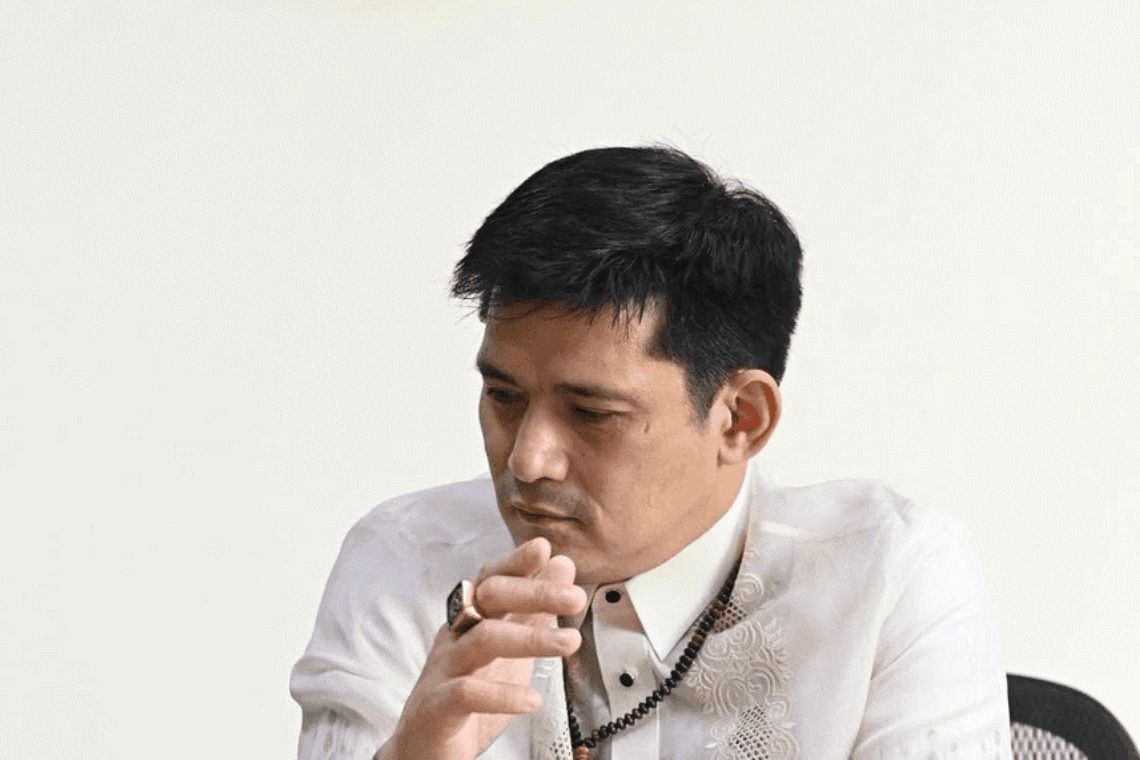
Senator Robin Padilla's Sabah education bill has renewed debate over whether the Philippines should prioritize historical territorial claims or pressing domestic challenges. Source: Robin Padilla Facebook
The proposal has sparked renewed discussion over history, diplomacy, and whether national priorities should remain focused on unresolved territorial claims or on pressing domestic challenges.
Filed as Senate Bill No. 1659, the proposed Sabah Mandatory Education Act would require public and private schools to teach the historical, legal, and diplomatic basis of the Philippine claim over North Borneo, now known as Sabah. According to Padilla, the measure aims to ensure that future generations understand what he describes as an important part of Philippine history and national identity.
The bill calls for the Sabah issue to be integrated into Philippine History, Araling Panlipunan, Social Studies, Civics and Culture, and other relevant subjects. It also proposes lessons covering the history of the Sultanate of Sulu, treaties connected to the territory, the legal foundations of the Philippine claim, developments in international law, and the importance of resolving disputes through peaceful means.
"It also proposes lessons covering the history of the Sultanate of Sulu, treaties connected to the territory, the legal foundations of the Philippine claim, developments in international law, and the importance of resolving disputes through peaceful means."
The Department of Education would work alongside the National Historical Commission of the Philippines, the Department of Foreign Affairs, and other government agencies to prepare teaching materials and train educators. Padilla said the lessons should present the issue in a factual, balanced, and age appropriate manner.
Updated headlines for free, straight to your inbox—no noise, just facts.
We collect your email only to send you updates. No third-party access. Ever. Your privacy matters. Read our Privacy Policy for full details.
While supporters argue that teaching the historical basis of the claim preserves an important chapter of Philippine history, critics have questioned whether reopening discussion of Sabah should be a national priority.
"Others contend that resources devoted to advancing the Sabah claim could instead be directed toward addressing immediate domestic concerns, including economic development, governance, infrastructure, and long standing peace efforts in conflict affected regions."
Some observers argue that Sabah has been administered by Malaysia since 1963 and is internationally recognized as part of the country. They also point to the principle of self-determination and note that any renewed emphasis on the territorial dispute could complicate diplomatic relations with Malaysia, an important regional partner on trade, labor migration, maritime security, and cross border cooperation.
Others contend that resources devoted to advancing the Sabah claim could instead be directed toward addressing immediate domestic concerns, including economic development, governance, infrastructure, and long standing peace efforts in conflict affected regions.
One of those domestic priorities remains Sulu, where the national government has reaffirmed that peace building efforts continue despite the province's exclusion from the Bangsamoro Autonomous Region in Muslim Mindanao following a 2024 Supreme Court ruling.
Officials from the Office of the Presidential Adviser on Peace, Reconciliation and Unity recently described Sulu as a "priority area" because it remains covered by the 1996 Final Peace Agreement with the Moro National Liberation Front. Government programs and engagement with MNLF communities continue, and funding has been retained for regional offices serving the province.
"These efforts underscore that peace building, governance, and development remain active responsibilities regardless of the province's administrative status."
The Bangsamoro government has also been directed to coordinate with Sulu's local government to ensure public services continue without disruption. These efforts underscore that peace building, governance, and development remain active responsibilities regardless of the province's administrative status.
The discussion surrounding Padilla's proposal reflects a broader policy question facing the Philippines. Historical issues remain important parts of the country's national narrative, but governments must also determine how best to allocate political attention, public resources, and legislative effort.
"As national conversations revisit historical claims, many stakeholders will also be watching whether equal attention is given to improving conditions within Sulu itself, where stable institutions and sustained peace efforts remain central to the region's future."
For southern Philippines, this debate carries additional significance. The Sultanate of Sulu forms part of the historical basis often cited in discussions about Sabah, yet the communities connected to that history continue to face contemporary challenges involving development, governance, and lasting peace. As national conversations revisit historical claims, many stakeholders will also be watching whether equal attention is given to improving conditions within Sulu itself, where stable institutions and sustained peace efforts remain central to the region's future.
REFERENCES
Know Sulu. (2026, March 27). Robin Padilla Sabah Claim Push Is a Strategic Mistake for the Philippines. Know Sulu. https://know-sulu.ph
Manila Standard. (2026, July 4). Senator Padilla seeks mandatory teaching of Sabah claim. Manila Standard. https://manilastandard.net
Rappler. (2026, July 3). Sulu remains ‘priority area’ for peace work despite BARMM exit. Rappler. https://www.rappler.com

KnowSulu is your trusted source for verified facts, news, and legal insights about the Sulu region. Committed to integrity, our mission is to empower the people of Sulu by providing accurate, transparent, and reliable information that matters.
