

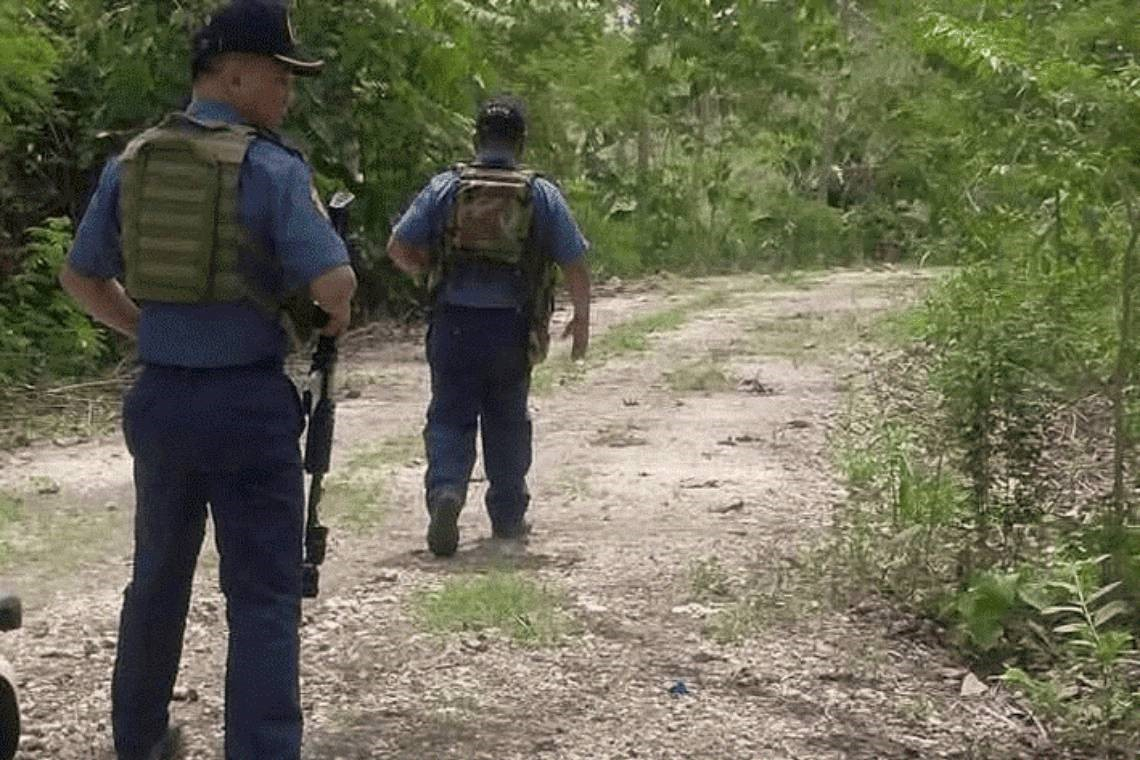
Police are investigating the murder of senior MILF commander Nguda Abdulrahim and have yet to determine the motive behind the attack. Source: CTTO Facebook
The death of Nguda Abdulrahim, a commander of the Moro Islamic Liberation Front's (MILF) 128th Base Command, has sparked fresh concerns about the fragile security situation in Maguindanao del Sur. As investigators work to identify those behind the attack, the incident arrives at a sensitive political moment, with Bangsamoro elections approaching and the peace process facing renewed tests.
Abdulrahim was shot dead on the night of June 12 in Barangay Tuayan Mother, Datu Hoffer, according to police reports. Authorities said unidentified gunmen entered his home and opened fire while he was preparing to sleep. He later died from multiple gunshot wounds.
The MILF remains a central stakeholder in the Bangsamoro Autonomous Region in Muslim Mindanao (BARMM), where the transition from armed struggle to political governance remains ongoing. Police have yet to determine the motive behind the killing or whether it is connected to recent violence in the area.
The timing of Abdulrahim's death is particularly sensitive. Bangsamoro is preparing for regional parliamentary elections that many observers view as a critical milestone in the peace process. Security and public trust remain essential to ensuring credible elections. Any escalation in violence risks undermining confidence in institutions that emerged from years of peace negotiations between the Philippine government and the MILF.
"While authorities have not linked the killing to broader political motives, incidents involving influential commanders often carry wider implications in areas where local security dynamics remain complex."
If armed factions become more fragmented or local disputes intensify, there is concern that long-standing clan rivalries and unresolved grievances could deepen instability. Such developments may complicate efforts to maintain security during the electoral period and test the durability of agreements that have helped reduce conflict over the past decade.
While authorities have not linked the killing to broader political motives, incidents involving influential commanders often carry wider implications in areas where local security dynamics remain complex.
Updated headlines for free, straight to your inbox—no noise, just facts.
We collect your email only to send you updates. No third-party access. Ever. Your privacy matters. Read our Privacy Policy for full details.
Events in Bangsamoro have implications that extend well beyond the mainland. Sulu, which has made significant strides in security and development in recent years, remains closely tied to the broader political trajectory of the Bangsamoro region. During Independence Day commemorations in Luuk on June 12, 2026, local officials, military leaders, and residents emphasized unity, peace, and development as pillars of the province's future. Sulu has undergone a remarkable transformation in recent years after decades of conflict. Leaders repeatedly highlighted the importance of preserving hard-won gains in security and community cooperation.
Renewed violence involving former combatants or local armed groups could risk undermining confidence in the peace process that has gradually transformed parts of the southern Philippines. By contrast, peaceful and credible Bangsamoro elections would signal that political institutions are increasingly replacing armed struggle as the primary means of resolving disputes and exercising leadership.
"A stable Bangsamoro could strengthen regional connectivity, encourage investment, and reinforce the sense that long-term peace across the Sulu archipelago is achievable."
Such an outcome would carry particular significance for Sulu, where local leaders and security officials have repeatedly emphasized preserving hard-won gains in peace and community cooperation. A stable Bangsamoro could strengthen regional connectivity, encourage investment, and reinforce the sense that long-term peace across the Sulu archipelago is achievable. Conversely, instability elsewhere in the region may revive old uncertainties in areas that continue to navigate a delicate transition from conflict to development.
The Bangsamoro peace process has frequently been described as one of Southeast Asia's most significant conflict resolution efforts. Its success depends not only on formal agreements but also on maintaining trust between communities, former combatants, and state institutions.
"As Bangsamoro approaches a pivotal electoral period, the choices made by political leaders, security forces, and local communities may shape not only the future of mainland Mindanao but also the trajectory of neighboring provinces such as Sulu, where the promise of lasting peace continues to unfold."
The killing of Nguda Abdulrahim underscores how fragile peace can remain even after years of progress. As Bangsamoro approaches a pivotal electoral period, the choices made by political leaders, security forces, and local communities may shape not only the future of mainland Mindanao but also the trajectory of neighboring provinces such as Sulu, where the promise of lasting peace continues to unfold.
REFERENCES
Philippine News Agency. (2026, June 12). Sulu honors Filipino heroes in 128th Independence Day rites. Manila Bulletin. https://mb.com.ph
Philstar. (2026, June 14). MILF leader gunned down. Philstar. https://www.philstar.com
Philstar. (2026, June 13). Ranking MILF commander shot dead in Maguindanao del Sur. Philstar. https://www.philstar.com

KnowSulu is your trusted source for verified facts, news, and legal insights about the Sulu region. Committed to integrity, our mission is to empower the people of Sulu by providing accurate, transparent, and reliable information that matters.
