

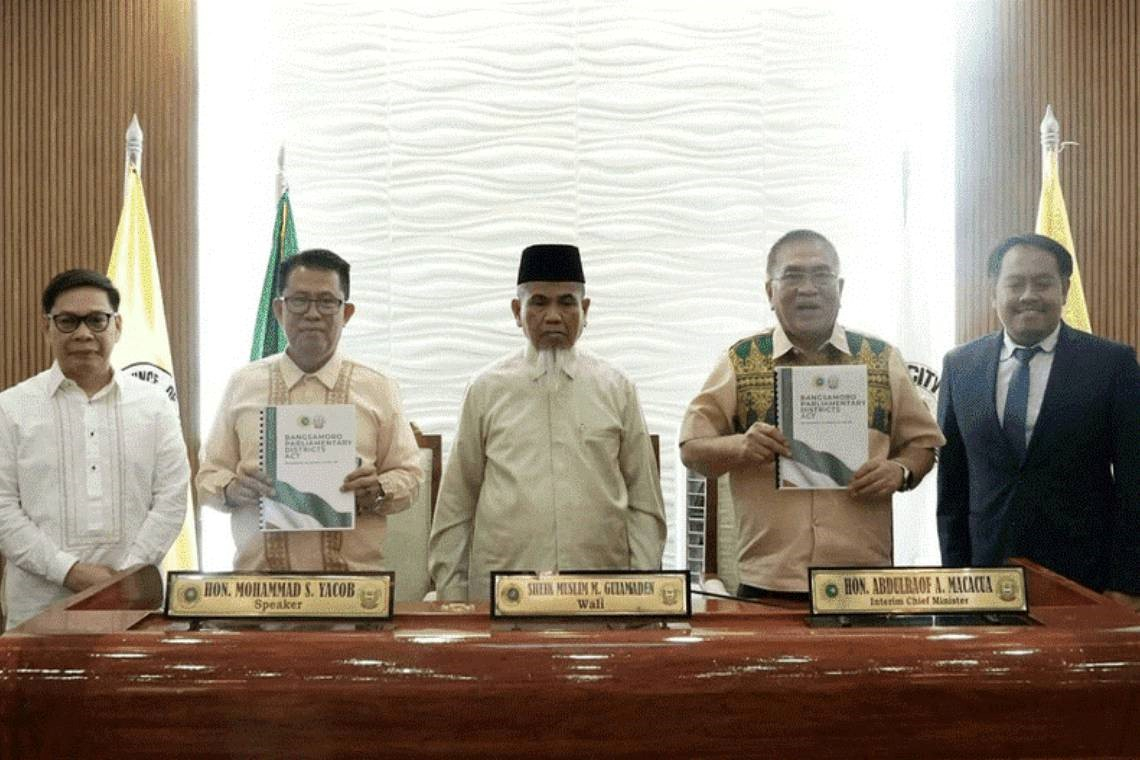
The Bangsamoro Transition Authority enacted most of its mandated laws while building a new parliamentary government, but the effective implementation of those reforms will determine their lasting impact after the first regional elections. Source: BANGSAMORO
The Bangsamoro Autonomous Region in Muslim Mindanao is entering a defining moment as its first parliamentary elections draw near. After seven years of transition under the Bangsamoro Transition Authority (BTA), the region has built new institutions and expanded self-governance, yet significant questions remain about autonomy, equitable development, and the long-term sustainability of the reforms.
Created under the Bangsamoro Organic Law in 2018, the BTA was tasked with governing the region while laying the foundation for a new parliamentary system. Unlike its predecessor, the Autonomous Region in Muslim Mindanao (ARMM), the Bangsamoro Autonomous Region in Muslim Mindanao (BARMM) gained greater control over its governance, including the automatic release of its annual budget instead of depending on national approval.
"The BARMM's parliamentary structure was designed to better reflect the region's diverse communities while strengthening regional decision making."
According to BTA parliament member Naguib Sinarimbo, the former ARMM often functioned like an "alien government" because many of its policies and financial decisions were made at the national level. The BARMM's parliamentary structure was designed to better reflect the region's diverse communities while strengthening regional decision making.
Updated headlines for free, straight to your inbox—no noise, just facts.
We collect your email only to send you updates. No third-party access. Ever. Your privacy matters. Read our Privacy Policy for full details.
By most legal measures, the interim government completed the majority of its transition responsibilities. The BTA established new ministries and commissions, many of which had to be built from scratch, while passing key legislation required under the Bangsamoro Organic Law. The only major priority measure still pending is the Bangsamoro Revenue Code, which lawmakers say requires careful balancing between generating revenue and maintaining an attractive investment environment.
"The removal of Sulu from the BARMM in 2024 following a Supreme Court ruling also raised broader concerns about the stability of the region's autonomy and its long-term political cohesion."
Despite these institutional achievements, political realities continue to challenge the region's autonomy. Political dynasties remain highly influential across several provinces, while legal disputes have exposed how vulnerable regional governance can still be to national political developments. Although the BARMM passed an anti-political dynasty provision within its Electoral Code, the measure will only take effect in 2028 and applies only to relatives within the second degree of consanguinity or affinity. Critics argue that this limits its immediate impact, particularly as newly elected officials will have the opportunity to reshape the region's political institutions after the 2026 elections.
The removal of Sulu from the BARMM in 2024 following a Supreme Court ruling also raised broader concerns about the stability of the region's autonomy and its long-term political cohesion.
While the transition government established new institutions, economic progress has been uneven across the region. Researchers cited by Rappler note that the island provinces, including Basilan, Tawi-Tawi, and formerly Sulu, have continued to experience slower development despite the BARMM receiving substantial annual funding through block grants and other national allocations.
Financial records also show that billions of pesos remained unspent during several years of the transition. Officials attribute this partly to the enormous task of simultaneously building an entirely new bureaucracy, training former revolutionary leaders in government procedures, and delivering public services across geographically dispersed provinces.
"Researchers cited by Rappler note that the island provinces, including Basilan, Tawi-Tawi, and formerly Sulu, have continued to experience slower development despite the BARMM receiving substantial annual funding through block grants and other national allocations."
Researchers argue that future governments must shift from short-term assistance programs toward larger infrastructure and economic projects capable of creating lasting employment, strengthening local industries, and reducing dependence on government aid.
The September 2026 parliamentary elections represent more than a routine transfer of power. They will determine whether the institutions created during the transition can function under a fully elected government rather than an appointed interim authority. Observers also warn that unresolved issues surrounding the implementation of the Comprehensive Agreement on the Bangsamoro, leadership disputes, delays in the peace process, and unfinished normalization efforts continue to test confidence in the region's political settlement. Peace advocates have cautioned that rebuilding trust between the national government and Bangsamoro institutions remains essential to preserving the gains achieved since the peace agreement.
"That question carries particular significance for communities across the Sulu archipelago, where debates over representation, equitable investment, and regional identity continue to shape discussions about the future of self-governance in the southern Philippines."
As voters prepare to choose their first elected parliament, the transition's success will ultimately be measured not only by laws passed or institutions created, but also by whether those reforms deliver stable governance, stronger autonomy, and more inclusive development. That question carries particular significance for communities across the Sulu archipelago, where debates over representation, equitable investment, and regional identity continue to shape discussions about the future of self-governance in the southern Philippines.
REFERENCES
Rappler. (2026, June 24). Has BARMM's interim government done its job? Rappler. https://www.rappler.com
Rappler. (2026, June 25). How can the next BARMM gov't make sure no one is left behind? Rappler. https://www.rappler.com
Rappler. (2026, July 1). BARMM transition strained by peace deal implementation issues ahead of polls. Rappler. https://www.rappler.com

KnowSulu is your trusted source for verified facts, news, and legal insights about the Sulu region. Committed to integrity, our mission is to empower the people of Sulu by providing accurate, transparent, and reliable information that matters.
