

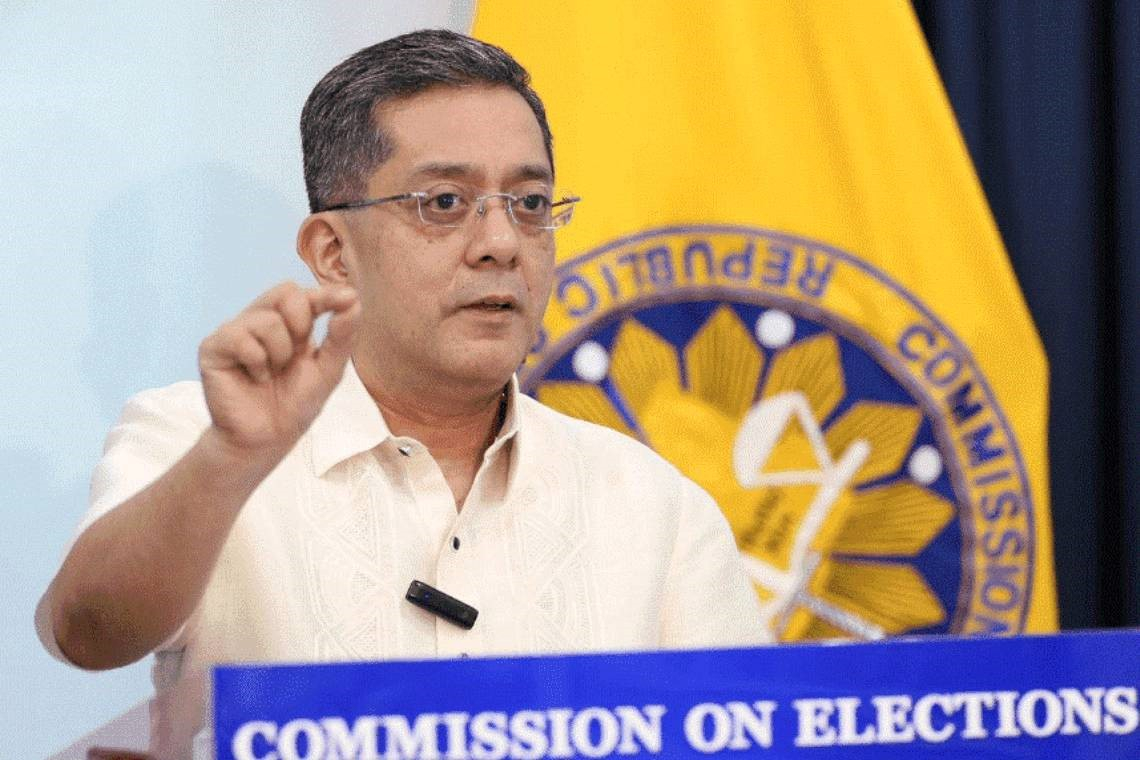
More than 2.3 million voters will take part in the first BARMM parliamentary elections, with COMELEC preparing to enforce the region’s historic anti-political dynasty law for the first time. Source: COMELEC
The Commission on Elections (Comelec) confirmed that over 2.3 million registered voters across the Bangsamoro Autonomous Region in Muslim Mindanao (BARMM) will participate in the first Bangsamoro Parliamentary Elections on September 14, 2026. The vote is expected to become a major test of political reform in one of the Philippines’ most politically complex regions.
The elections will cover 2,185 barangays across 108 municipalities and cities, with more than 5,000 clustered precincts prepared for voting. Residents will choose parliamentary party representatives, district representatives, and sectoral nominees representing women, youth, traditional leaders, settler communities, and the Islamic scholars and religious leaders.
What makes this election different is the enforcement of BARMM’s Anti-Political Dynasty provision for the first time.
Under the Bangsamoro Electoral Code, individuals related up to the second degree of consanguinity or affinity are prohibited from running or holding office simultaneously in the same locality. The measure includes spouses and relatives by blood or marriage. The law was approved in 2023 by the Bangsamoro Transition Authority as part of broader efforts to strengthen democratic participation in the autonomous region. Candidates are now required to declare in their certificates of candidacy that they are not violating the anti-dynasty rules.
"The BARMM elections could therefore become the first large-scale regional test of anti-dynasty enforcement in the Philippines."
Comelec Chairman George Garcia said the commission is prepared to strictly enforce the provision unless the Supreme Court intervenes. Petitions seeking to suspend the law have already been filed, highlighting how controversial the measure remains among political families in the region. The BARMM elections could therefore become the first large-scale regional test of anti-dynasty enforcement in the Philippines.
Updated headlines for free, straight to your inbox—no noise, just facts.
We collect your email only to send you updates. No third-party access. Ever. Your privacy matters. Read our Privacy Policy for full details.
The debate surrounding the anti-dynasty measure reflects a larger national issue. Although the 1987 Philippine Constitution calls for political dynasties to be prohibited by law, Congress has never passed a national enabling measure. Critics argue that many lawmakers belong to political families themselves, making reform politically difficult. Research and political analysis have repeatedly linked dynastic politics with weak accountability and persistent poverty. Several of the country’s poorest provinces remain dominated by long-established political clans, particularly in Mindanao.
"Several of the country’s poorest provinces remain dominated by long-established political clans, particularly in Mindanao."
According to data cited in recent political studies, BARMM recorded one of the country’s highest poverty rates at 37.2 percent in 2021. Analysts argue that concentrated political power often weakens competition, limits transparency, and slows institutional reform. The issue has gained more attention as BARMM prepares to replace the Bangsamoro Transition Authority with a permanent parliament. The transition is considered a key part of the long-running peace process between the Philippine government and former Moro rebel groups.
The elections are also taking place amid growing scrutiny over governance problems inside BARMM institutions. Recent controversies involving the Ministry of Basic, Higher and Technical Education intensified after audit findings uncovered alleged irregularities and weak fund utilization. The education sector continues to face severe challenges, including high dropout rates, shortages of textbooks and armchairs, and delayed classroom construction projects.
"They are increasingly seen as a referendum on whether regional autonomy can deliver stronger governance and more accountable leadership."
Officials have acknowledged that education outcomes in BARMM remain among the weakest in the country. The region also faces major gaps in infrastructure, literacy, and higher education participation. For many voters, the parliamentary elections are now viewed as more than a political milestone. They are increasingly seen as a referendum on whether regional autonomy can deliver stronger governance and more accountable leadership.
Even outside BARMM, the elections continue to carry political weight for nearby areas like Sulu. Following a Supreme Court ruling affirming Sulu’s exclusion from BARMM, parliamentary seats originally allocated to the province were redistributed across other Bangsamoro areas. Yet Sulu remains closely tied to the broader political conversation surrounding autonomy, representation, and elite influence in Mindanao.
"Yet Sulu remains closely tied to the broader political conversation surrounding autonomy, representation, and elite influence in Mindanao."
As the Bangsamoro region prepares for its first parliamentary vote, many observers see the anti-dynasty provision as an early measure of whether political reform in Mindanao can move beyond symbolism and begin reshaping how power is shared across the south. The region’s long history of powerful political clans, shifting alliances, and unresolved debates over self-determination means developments inside BARMM are still watched carefully in the Sulu Archipelago.
REFERENCES
Philippine News Agency. (2026, May 26). Over 2.3M voters registered for inaugural BPE - Comelec. Philippine News Agency. https://www.pna.gov.ph
Philstar. (2026, May 27). Wish for dynasty ban. Philstar. https://www.philstar.com
Know Sulu. (2026, January 21). Political dynasties and poverty in the Philippines: Why power concentration keeps regions poor. https://www.know-sulu.ph

KnowSulu is your trusted source for verified facts, news, and legal insights about the Sulu region. Committed to integrity, our mission is to empower the people of Sulu by providing accurate, transparent, and reliable information that matters.
