

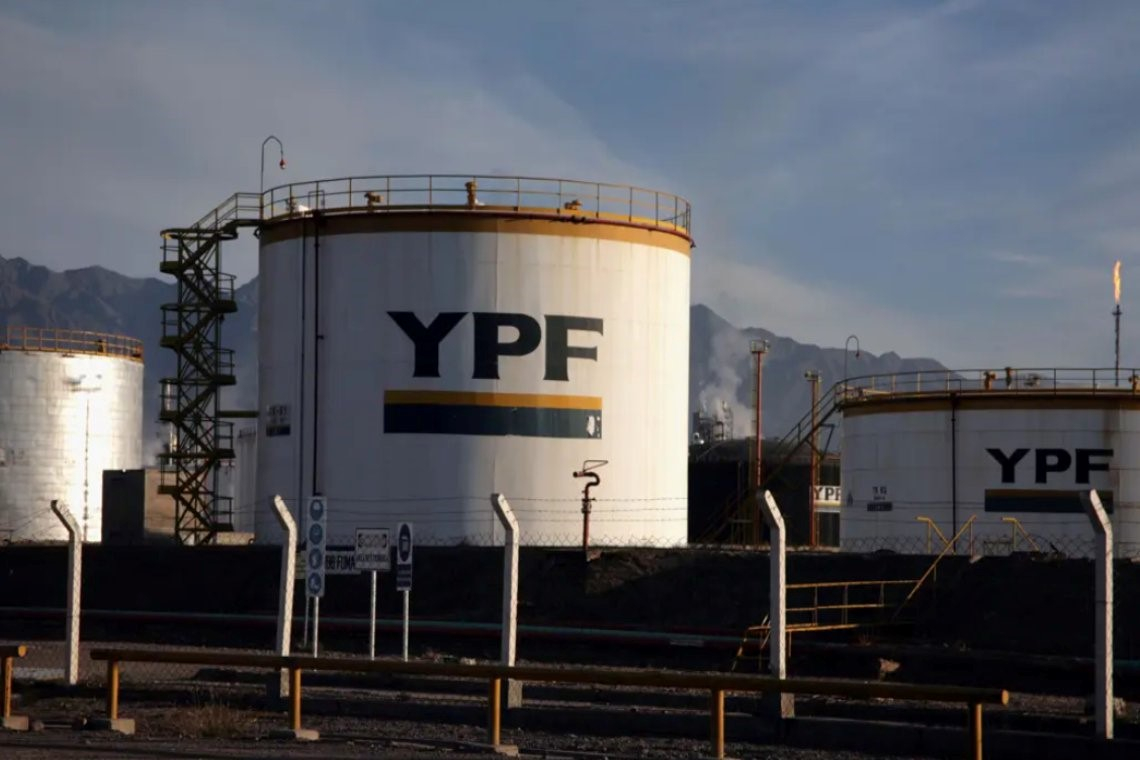
Argentinian energy company YPF was nationalized in 2012. Former shareholders Petersen Energia Inversora and Eton Park Capital Management sued to cover losses and received a favorable ruling from a lower New York court in 2023. Image Source: Energy Connects
In a 2–1 decision in March 2026, the 2nd U.S. Circuit Court of Appeals ruled that the claims from former shareholders of state-owned YPF did not hold under Argentine law, overturning a September 2023 judgment. The original award, among the largest of its kind, had risen to roughly $18 billion with interest and was expected to deliver a major payout to Burfurd Capital, the litigation funder backing the case.
The scale of the award had raised concerns in Buenos Aires, where officials warned it could destabilize public finances. The damages alone were equivalent to nearly half of the country’s 2024 budget, underscoring the stakes involved.
The ruling mirrors a pattern seen in the Sulu arbitration backed by Therium, where claimants initially won a roughly $15 billion award against Malaysia in February 2022. The dispute, stemming from eight disputed modern heirs of the historical Sulu Sultanate claiming ownership of Malaysian’s Sabah state, generated the award value based on Sabah’s economic potential, with little regard for broader public interests.
The award was later annulled in multiple jurisdictions with a final rejection delivered by the Paris Court of Appeal in December 9th, 2025. Both cases involved third-party litigation funding structures backing private claims of economy-shaking sums against sovereign states, with early victories later undone as courts revisited shaky jurisdictional and legal foundations.
“Both cases involved third-party litigation funding structures backing private claims of economy-shaking sums against sovereign states, with early victories later undone as courts revisited shaky jurisdictional and legal foundations.”
Updated headlines for free, straight to your inbox—no noise, just facts.
We collect your email only to send you updates. No third-party access. Ever. Your privacy matters. Read our Privacy Policy for full details.
Indeed, in both disputes, claimants pursued forums outside the relevant sovereign’s territory in search of a sympathetic hearing. The Sulu arbitration was first brought in Spain and later in France, while the YPF litigation unfolded in the United States. In the latest YPF ruling, the appeals court did not comment on whether the U.S. was the most suitable venue for a dispute governed by Argentine law, according to Reuters. Burford also reassured investors that they remained “optimistic about an eventual positive outcome in the case given the availability of international arbitration”, signaling the possibility of further appeal in different jurisdictions.
The pattern highlights a broader concern: well-funded third-party litigation financiers can leverage their resources to move disputes across multiple jurisdictions, creating pressure on sovereign states and putting overseas assets at risk.
The developments also raise questions about the broader litigation funding industry. Firms backing such cases appear to rely on a small number of high-value and risky cases to generate returns, particularly as lower-value disputes have struggled to deliver consistent profits. The collapse of these major awards suggests limits to that strategy, especially when legal and jurisdictional hurdles intensify at later stages.
“Firms backing such cases appear to rely on a small number of high-value and risky cases to generate returns, particularly as lower-value disputes have struggled to deliver consistent profits.”
One firm that has already adjusted its approach is the Sulu Arbitration’s funder, Therium. The litigation funder admitted it barely broke even on its investment in the successful and high profile subpostmasters litigation in the UK. Cases like this may have driven a higher risk and reward investment strategy that led to the Sulu arbitration against Malaysia. Yet after reportedly invested about $20 million without success, the company has scaled back its role as a direct funder. It has since repositioned itself as an advisor following a broader restructuring and widely publicized downsizing.
Control over parts of its portfolio has shifted to a larger player, Fortress Investment Group, which has been expanding its presence in legal finance with $6.6 billion in legal assets by the end of 2024 and a new litigation fund targeting a sum of $1 billion launched in January of 2025. Such firms are increasingly shaping the sector. Their scale allows them to absorb losses and potentially fund a growing number of controversial litigation that might otherwise force smaller funders to retreat.
“Their scale allows them to absorb losses and potentially fund a growing number of controversial litigation that might otherwise force smaller funders to retreat.”
Nonetheless, Burford’s position highlights the volatility inherent in the model. Its shares fell sharply after the U.S. court decision, reflecting investor concern about the reliance on a small number of large, uncertain outcomes. Although the company maintains a broader portfolio, the episode underscores the risks tied to pursuing outsized claims against sovereign states.
Taken together, the Argentina and Sulu cases point to a shifting landscape for litigation funding. While multibillion-dollar awards remain tempting, recent reversals show these gains are far from guaranteed, especially when they hinge on complex cross-border enforcement, contested legal grounds, and costs that sovereign states cannot absorb without threatening their economies and populations—making them likely to resist such claims at every turn.
REFERENCES
Burford Capital. (2026, March 30). Burford Capital further statement on YPF appeal decision. https://investors.burfordcapital.com
Knowsulu. (2025, December 12). Jersey Court Greenlights Counterclaims Against Sulu Heirs and Funders. https://know-sulu.ph
Knowsulu. (2025, November 14). Therium’s activity underscores national security risks in litigation funding. https://know-sulu.ph
Stempel, J. (2026, March 27). US appeals court voids $16.1 billion judgment against Argentina over YPF seizure. Reuters. https://www.reuters.com

KnowSulu is your trusted source for verified facts, news, and legal insights about the Sulu region. Committed to integrity, our mission is to empower the people of Sulu by providing accurate, transparent, and reliable information that matters.
