

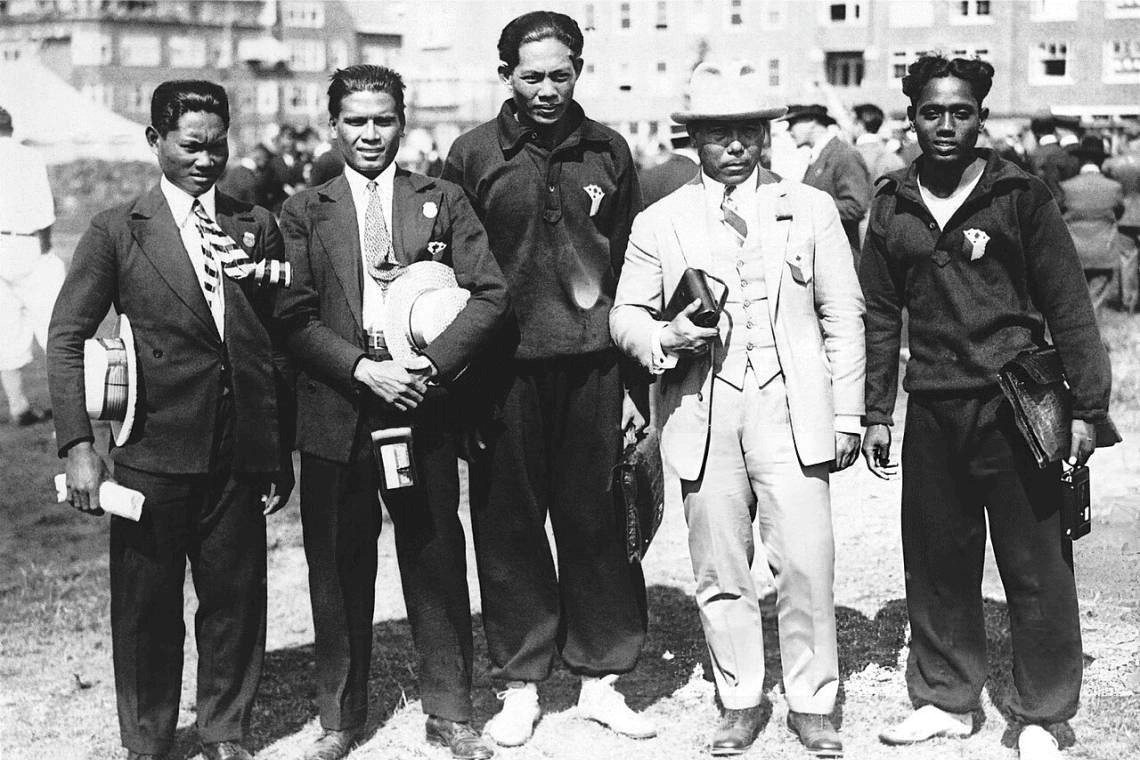
Olympic swimmer Tuburan Tamse, pictured on the left, made history as the first Muslim Filipino Olympian, leaving a legacy that continues to inspire Sulu and Philippine sports. Source: Unknown
Among the pioneers was Tuburan Tamse of Siasi, Sulu, whose remarkable journey made him the first Muslim Filipino Olympian and one of the country's earliest Olympic swimmers.
Competitive swimming in the Philippines began during the American colonial period, when the first swimming pools and organized competitions were introduced in the early 1900s. The construction of the first swimming pool at Fort McKinley YMCA in 1907 and the first formal swimming meets helped transform swimming from a recreational activity into a competitive sport. Filipino athletes soon embraced the discipline, and by the 1910s the country was already producing talented swimmers who competed internationally.
"The Philippines steadily built a reputation in aquatic sports through the Far Eastern Games and other regional competitions."
The Philippines steadily built a reputation in aquatic sports through the Far Eastern Games and other regional competitions. Swimmers such as Teófilo Yldefonso later gained international recognition by winning Olympic bronze medals in 1928 and 1932, achievements that remain milestones in Philippine sporting history. Yet alongside these celebrated names were other pioneers whose contributions deserve equal recognition.
Updated headlines for free, straight to your inbox—no noise, just facts.
We collect your email only to send you updates. No third-party access. Ever. Your privacy matters. Read our Privacy Policy for full details.
One of those trailblazers was Tuburan Tamse, who was born in Siasi, Sulu, in 1911 and belonged to the Tausug community. At only 17 years old, he represented the Philippines at the 1928 Summer Olympics in Amsterdam, competing in the men's 400-meter and 1,500-meter freestyle events. He was also entered in the 100-meter freestyle but did not start that race.
Although Tamse did not advance to the medal rounds, his Olympic appearance carried historic significance. He became the first Muslim Filipino Olympian, opening the door for greater representation of Muslim Filipinos in national sports. At a time when opportunities for athletes from remote provinces were limited, simply reaching the Olympic Games reflected extraordinary determination and talent.
"He became the first Muslim Filipino Olympian, opening the door for greater representation of Muslim Filipinos in national sports."
Tamse also competed in the Far Eastern Games during an era when Japanese swimmers dominated freestyle competition. After his athletic career, he graduated from the University of Santo Tomas and entered government service, eventually serving as chief of the Bureau of Internal Revenue in Zamboanga City. His life demonstrated that excellence in sports could be matched by public service.
The history of Philippine swimming includes many accomplished Muslim athletes from Mindanao and Sulu. Historical records highlight swimmers such as Jikirum Adjalludin, Arsad Alpad, Angkang Nakaria, Asdai Tahil, and later Kemalpasa Umih, who continued to strengthen the country's presence in regional and international competitions. Their achievements reflected the deep connection between coastal communities and aquatic sports.
Tamse's pioneering role stands out because he represented far more than athletic performance. His participation showed that talent could emerge from every part of the Philippines, regardless of geography or background. Today, diversity in Philippine sports is widely celebrated, but Tamse was helping build that foundation nearly a century ago. His story also serves as an important reminder that Olympic history is shaped not only by medal winners but also by those who broke barriers and expanded opportunities for future generations. Every athlete who followed benefited from pioneers willing to compete on the world's biggest stage.
"His journey from the island municipality of Siasi to the Olympic Games reflects the region's long tradition of producing skilled swimmers and dedicated athletes."
For the people of Sulu, Tamse remains a source of quiet pride. His journey from the island municipality of Siasi to the Olympic Games reflects the region's long tradition of producing skilled swimmers and dedicated athletes. As interest grows in preserving local history and recognizing overlooked national figures, his legacy reminds Filipinos that important chapters of the country's sporting heritage were written far from the capital, including in the waters and communities of Sulu.
REFERENCES
Olympedia. (n.d.). Tuburan Tamse. Olympedia. https://www.olympedia.org
Philippine Killerwhale. (2025, July 5). Did You Know? 5 Filipino Legends Who Made Waves in Philippine Swimming. Philippine Killerwhale. https://philippinekillerwhale.com
Philippines Swimming. (n.d.). Philippines Swimming History. Philippines Swimming. https://philswimming.com

KnowSulu is your trusted source for verified facts, news, and legal insights about the Sulu region. Committed to integrity, our mission is to empower the people of Sulu by providing accurate, transparent, and reliable information that matters.
