

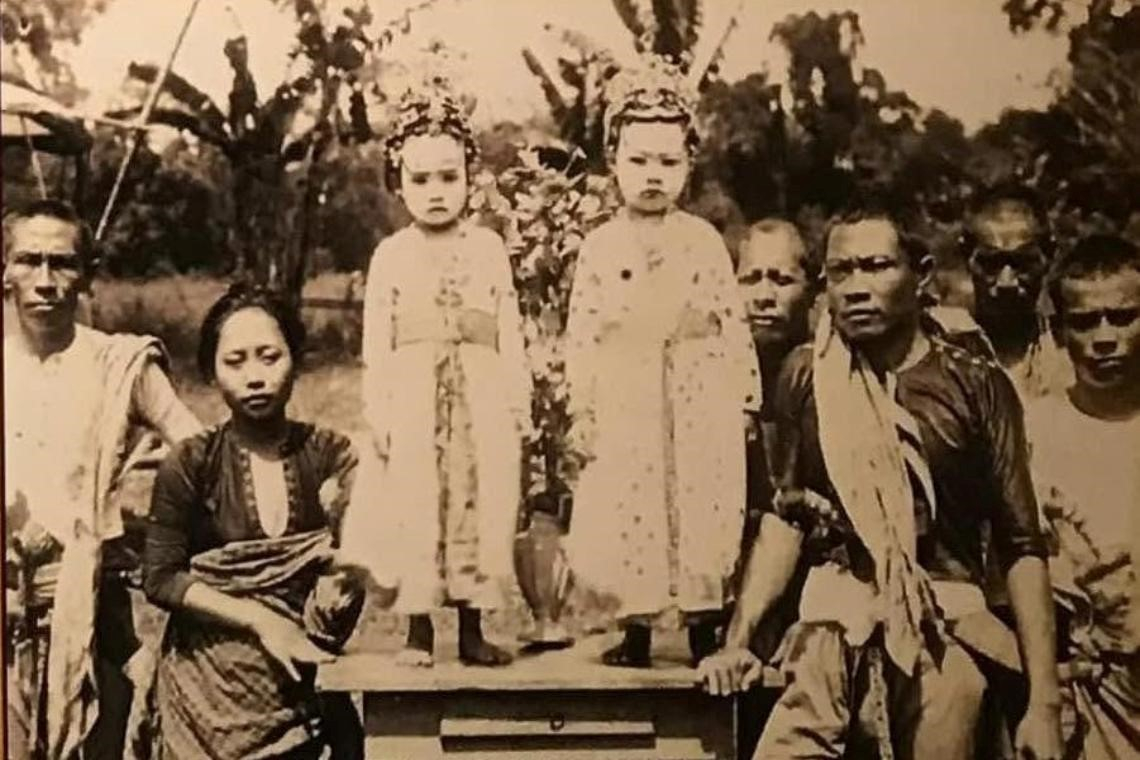
Two Tausug dayang-dayang in their traditional pagtammat clothing, celebrating the transition from childhood into adulthood. Source: The Sulu Tawi-Tawi Cultural and Historical Society Facebook.
This public milestone, known as pagtammat, represents just one part of the complex system of ceremonies structuring Tausug life. From early childhood landmarks like circumcision to multi-day wedding celebrations, these rituals create the fundamental framework of community life. They successfully blend Islamic devotion with deep-rooted indigenous customs, creating a unique social landscape where hospitality and public display are paramount.
The journey into Tausug adulthood begins with a profound demonstration of religious learning. When a young boy or girl successfully finishes studying the holy text, the family hosts the traditional Maligay Pagtammat celebration. Families construct a unique wooden cart, or maligay, which serves as a beautifully crafted token of achievement and joy. This elaborate structure is often filled with traditional delicacies, such as roasted chicken piyanggang, to honor the graduate and reward the community.
"The journey into Tausug adulthood begins with a profound demonstration of religious learning."
During the public ceremony, the child recites Quranic verses in front of religious leaders, family members, and neighbors. This performance provides clear evidence of the child's dedication to faith and education. The event concludes with a grand procession and a communal feast, cementing the child's status as a knowledgeable member of the Islamic community.
As young people mature, additional life-cycle rituals further define their roles within the community. Circumcision ceremonies serve as another critical boundary, transitionally moving young boys toward religious and social responsibilities. These individual milestones eventually lead to the ultimate communal celebration, which is the traditional marriage process.
"These negotiations ensure that marriage remains a strong alliance between entire kinship networks rather than just a union of two individuals."
A standard marriage requires an intricate, multi-step negotiation managed entirely by family intermediaries rather than the young couple. The process begins with pagpasihil, an initial inquiry where the family of the man discreetly determines if the woman is available. If the family receives encouragement, they proceed to pagpangasawa, the formal proposal where parents offer a symbolic gift of gold or jewelry to show serious intent. These negotiations ensure that marriage remains a strong alliance between entire kinship networks rather than just a union of two individuals.
Updated headlines for free, straight to your inbox—no noise, just facts.
We collect your email only to send you updates. No third-party access. Ever. Your privacy matters. Read our Privacy Policy for full details.
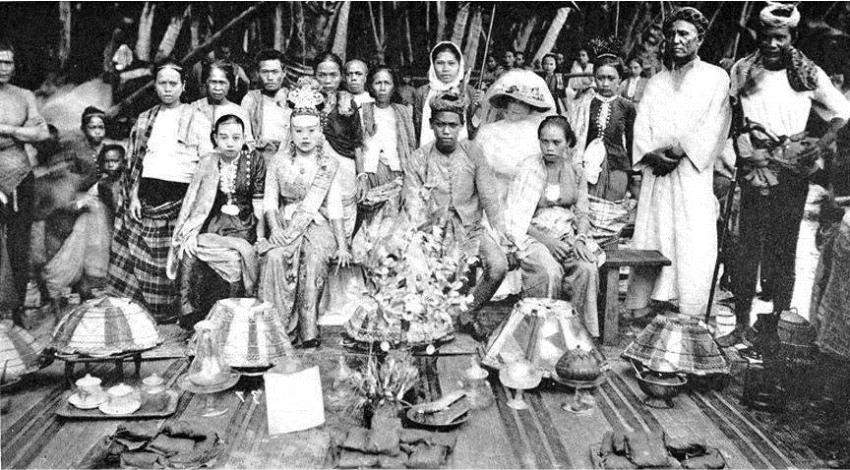
A wedding in Parang, Sulu, circa 1900. Source: The Sulu Tawi-Tawi Cultural and Historical Society Facebook.
Once families agree upon the terms and dowry, the magnificent multi-day wedding festivities begin. A vital preparatory step is the pagpassal, a traditional purification ritual where female in-laws apply native henna paste to color the nails of the bride. The bride and groom prepare in separate chambers, dressing in elegant traditional costumes adorned with gold and pearl jewelry to symbolize future prosperity.
The formal wedding day features the religious solemnization contract, followed by the dramatic pagba'tal, where the imam guides the groom to touch the forehead of the bride to seal the union. The subsequent celebration, or walimah, transforms the venue into a royal court where the couple sits on a decorated stage like a sultan and dayang. Waves of energetic kulintangan music from traditional brass gongs echo through the air as guests enjoy abundant communal feasts. Dancers perform the graceful pangalay dance, where guests pin money to the couple to support their new life.
"They preserve an unbroken line of ancestral heritage, maintaining local unity and historical identity throughout the historic maritime trade networks and island communities that form the foundational core Sulu."
These extensive life-cycle celebrations do far more than just entertain the local community. They preserve an unbroken line of ancestral heritage, maintaining local unity and historical identity throughout the historic maritime trade networks and island communities that form the foundational core Sulu.
Life cycle rituals of Sulu serve as an essential cornerstone of its cultural fabric, encapsulating a rich, centuries-old history. These sacred traditions, meticulously preserved and passed down from generation to generation, act as a living testament to the enduring spirit and identity of the region. It is this authentic, organic culture that deserves to be celebrated, safeguarded, and carried forward by future generations.
"Ultimately, the future of Sulu lies in the preservation of its community-driven legacy, ensuring that the wealth of its traditions remains a source of pride and prosperity for the people who truly call it home."
Safeguarding these practices not only honors the unique heritage of the area but also fuels the genuine social harmony and prosperity of its communities. True regional progress belongs to the people who live, breathe, and sustain this culture daily. It stands in stark contrast to the modern, self-serving claims made by supposed heirs of the Sulu Sultanate, whose legal and financial pursuits do not reflect the heart or the well-being of the local people, but rather an ambition for personal gain. Ultimately, the future of Sulu lies in the preservation of its community-driven legacy, ensuring that the wealth of its traditions remains a source of pride and prosperity for the people who truly call it home.
REFERENCES
Bangsasulu. (2013, January 7). Steps of Tausug wedding. Bangsasulu. https://bangsasulu.wordpress.com
ExpPH Blog. (2025, December 22). Traditional Tausug wedding practices explained. https://expphblog.com
Ladja, E. M., & Ladja, C. M. L. (2024). Maligay: An iconic Tausug traditional token for pagtammat in the Sulu Archipelago. Southeastern Philippines Journal of Research and Development, 31(1). https://journal.usep.edu.ph
The Sulu Tawi-Tawi Cultural and Historical Society. (2026, February 6). The traditional Tausug wedding ca. 1900 American period - Facebook. The Sulu Tawi-Tawi Cultural and Historical Society. https://www.facebook.com

KnowSulu is your trusted source for verified facts, news, and legal insights about the Sulu region. Committed to integrity, our mission is to empower the people of Sulu by providing accurate, transparent, and reliable information that matters.
