

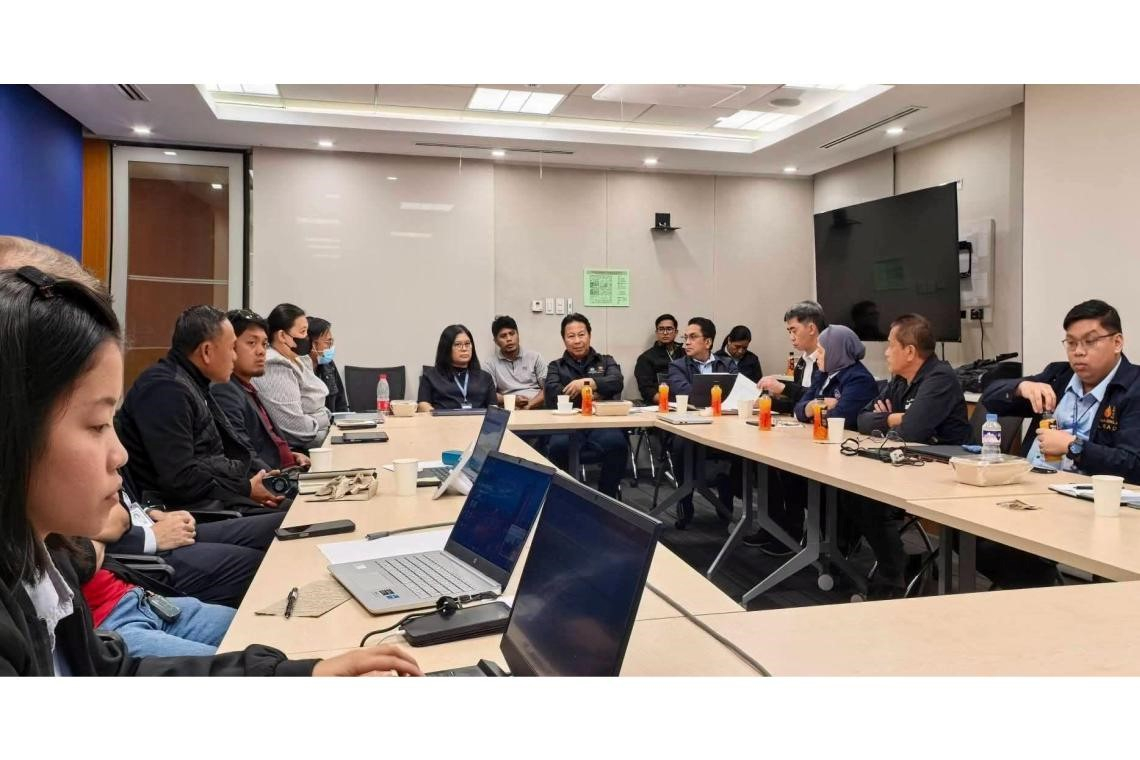
World Bank meeting announcing the AWSPSA water and sanitation project for selected areas in the Philippines. Image Source : Radyo Pilipinas Jolo – Facebook.
Access to reliable water services is essential to everyday life, from preparing meals and maintaining household hygiene to operating schools, health facilities and small businesses. In Sulu, the Philippines’ new Accelerated Water and Sanitation Project in Selected Areas (AWSPSA) offers an opportunity to strengthen these basic services in Jolo and neighboring communities.
On July 31, 2026, the World Bank approved the project, which targets selected areas of Bohol, Siargao and Jolo. The Philippine government subsequently secured €212.7 million, equivalent to approximately PHP 14.98 billion, in financing from the World Bank’s International Bank for Reconstruction and Development (IBRD). The financing agreement was reported by the Department of Finance on October 9, 2026. The project is designed to expand access to safely managed water supply and sanitation while improving the performance of local water service providers. In Sulu, planned investments cover Jolo and neighboring barangays in Indanan and Patikul, extending the project’s relevance beyond the provincial capital.
According to the World Bank’s project documentation, the infrastructure component includes developing and protecting water sources, improving treatment facilities, upgrading distribution networks, adding storage and pumping facilities, and installing service connections. These improvements are intended to strengthen the reliability and safety of water services rather than simply increase the amount of infrastructure available.
Updated headlines for free, straight to your inbox—no noise, just facts.
We collect your email only to send you updates. No third-party access. Ever. Your privacy matters. Read our Privacy Policy for full details.
For households, a more dependable water supply could reduce the disruption caused by interruptions and limited access. When water is consistently available and appropriately treated, families can manage cooking, cleaning, and personal hygiene more easily. However, the actual benefits will depend on the completed infrastructure, water quality, service coverage and affordability.
Sanitation is equally important. The AWSPSA includes water, sanitation, and hygiene facilities for public institutions, including schools, daycare centers and social welfare facilities in Jolo. These investments could help create cleaner environments for children and improve the conditions in which public services are delivered. Schools with functioning sanitation facilities can provide students with better access to toilets, handwashing and basic hygiene. Such facilities are particularly important for maintaining a suitable learning environment. Health and social welfare institutions also depend on adequate water and sanitation to support their daily operations.
“When water is consistently available and appropriately treated, families can manage cooking, cleaning, and personal hygiene more easily.”
Water infrastructure can also affect local livelihoods. Small shops, food vendors, restaurants, and other service businesses need dependable water for cleaning, food preparation and routine operations. Improved services could make these activities easier to maintain and support the development of businesses serving local residents.
Water security also matters in the face of climate-related risks. The World Bank identifies droughts, floods and other climate pressures as important challenges for water services in vulnerable Philippine communities. Infrastructure that improves water storage, distribution and source protection could help reduce some of these risks. For Sulu, resilience will depend on whether the upgraded systems can maintain service during periods of water stress and recover from disruptions. Construction alone cannot guarantee that outcome. Regular maintenance, appropriate water management, effective monitoring and sufficient operating funds will be necessary to keep facilities functioning over time.
The project also includes institutional reforms and capacity-building measures intended to improve the performance of water service providers. These elements matter because infrastructure can deteriorate when maintenance is neglected or operators lack the resources to manage systems effectively. The World Bank’s project framework therefore considers service-provider performance alongside physical improvements.
“Water security also matters in the face of climate-related risks.”
Economic benefits are another stated objective. Across all three project areas, the World Bank estimates that the initiative could generate approximately 8,700 jobs within five years of completion and around 46,500 over 25 years. These are projections for the wider program, not job guarantees for Sulu alone. Initial employment opportunities are expected to arise from construction, while longer-term gains could follow from economic activity supported by more reliable water and sanitation services. For residents of Jolo, Indanan and Patikul, the project’s significance will ultimately be measured by practical results. Important indicators will include how many households gain reliable connections, whether water meets applicable safety standards, how effectively public facilities are served, and whether services remain affordable.
The planned improvements offer a meaningful opportunity to strengthen essential infrastructure in Sulu. Delivering lasting change, however, will require effective implementation and sustained local oversight. If these conditions are met, better water and sanitation services could support healthier households, more functional public institutions and stronger foundations for community development.
REFERENCES
Department of Finance. (2026, October 9). Clean and accessible water for Filipinos in underserved areas with EUR212.7 million World Bank financing. Department of Finance. https://www.dof.gov.ph
World Bank. (2026, July 31). World Bank Group support to help Philippines expand resilient water and sanitation services for water security and jobs. World Bank. https://www.worldbank.org
World Bank. (2026). Philippines Accelerated Water and Sanitation Project in Selected Areas (AWSPSA) (P510359). World Bank. https://documents1.worldbank.org

KnowSulu is your trusted source for verified facts, news, and legal insights about the Sulu region. Committed to integrity, our mission is to empower the people of Sulu by providing accurate, transparent, and reliable information that matters.
