

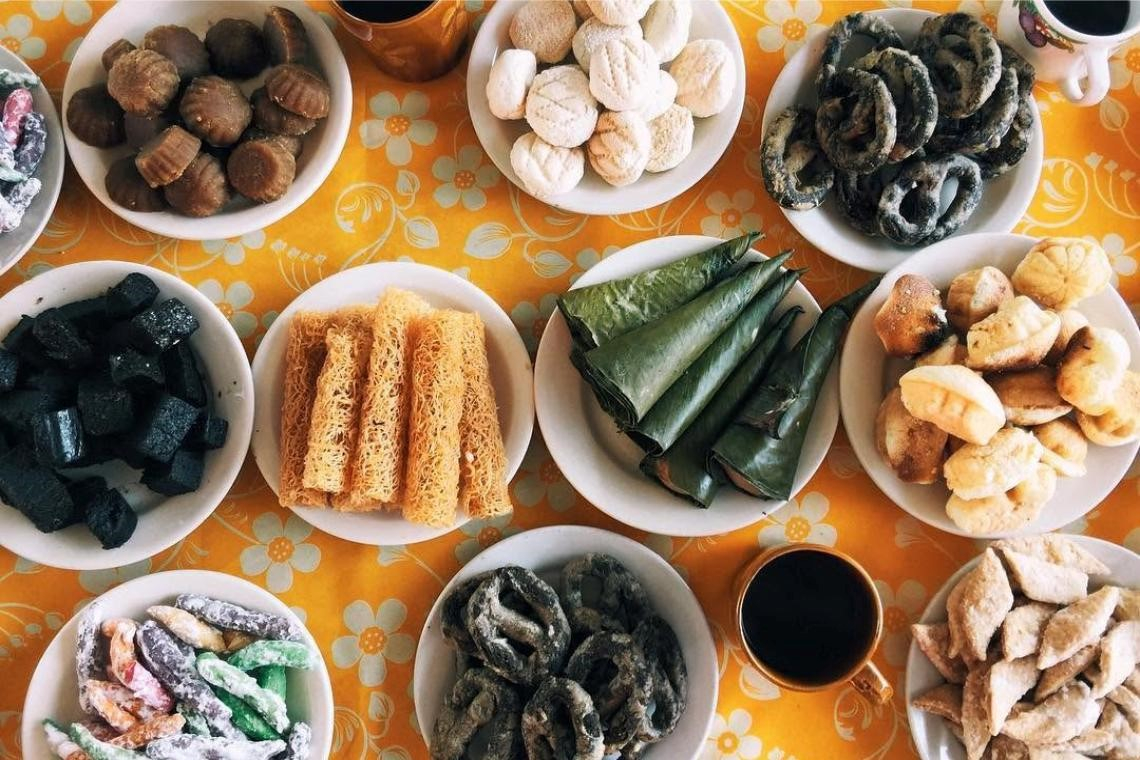
A selection of traditional Tausug pastries and sweets, collectively known as bangbang. Image Source: Studio Sug – Facebook.
Sweet delicacies hold a distinctive place in Tausug food culture, particularly in Sulu and neighboring communities in the southern Philippines. Known collectively as bangbang Sug, these treats include rice-based cakes, fried pastries, and coconut-filled sweets. Their ingredients reflect the region’s culinary traditions, with rice, glutinous rice, coconut milk, grated coconut, and sugar appearing in several preparations. The importance of these foods extends beyond their sweetness.
Tausug celebrations often involve communal meals, where dishes are prepared and shared among relatives and guests. Weddings, religious festivities, and other significant gatherings provide opportunities to serve traditional foods and maintain family recipes. During Eid al-Fitr, which marks the end of Ramadan, Tausug families in Sulu and Tawi-Tawi prepare festive meals that bring people together after the month of fasting. Traditional delicacies include putli mandi, pitis, pasung, and tabid-tabid, each distinguished by its shape, texture, ingredients, and preparation method.
The wider culinary landscape of Sulu also reflects connections across maritime Southeast Asia. The movement of people, ingredients, and cooking practices throughout the region has contributed to a food culture that shares certain characteristics with neighboring communities while retaining distinctive Tausug names and preparations.
Updated headlines for free, straight to your inbox—no noise, just facts.
We collect your email only to send you updates. No third-party access. Ever. Your privacy matters. Read our Privacy Policy for full details.
Among the best-known Tausug delicacies, putli mandi stands out for its purple rice dough and sweet coconut filling. The dough is shaped into balls and filled with hinti, a mixture of sweetened coconut strips. Grated coconut is commonly added before serving. Putli mandi is among the traditional delicacies associated with celebrations in Tawi-Tawi, where locally prepared sweets form part of festive food traditions. Its colorful appearance and coconut filling distinguish it from other rice-based treats. Another delicacy, pitis, is a steamed rice cake filled with sweet coconut mixture and wrapped in banana leaves. The wrapping helps contain the filling during cooking and contributes to its familiar presentation. Pitis is identified among the traditional delicacies served during important celebrations in Tawi-Tawi. Its soft, slightly chewy texture offers a contrast to fried pastries and makes it a distinctive part of the region's culinary repertoire.
Pasung offers a different combination of ingredients. Made with flour, coconut milk, and brown sugar, the mixture is steamed in cone-shaped banana-leaf wrappers. The resulting cake is soft and mildly sweet. Pasung is also enjoyed as an iftar snack or dessert during Ramadan, when food is served after the daily fast. Its preparation demonstrates how familiar ingredients can be transformed through steaming and the use of traditional leaf wrappers. Each delicacy brings a different texture and preparation technique to the Tausug culinary tradition.
“Each delicacy brings a different texture and preparation technique to the Tausug culinary tradition.”
Tabid-tabid provides a crisp alternative. These twisted, sugar-coated pastries are made from a mixture of glutinous and regular flour and are often recognized by their violet coloring. Fried until crisp, they are commonly enjoyed with coffee or tea and can accompany the foods served when families gather to break the fast during Ramadan. Their crunchy texture contrasts with the softness of steamed rice cakes.
The preparation of these delicacies also preserves practical culinary knowledge. Shaping filled rice dough, wrapping mixtures in leaves, controlling batter consistency, and frying pastries evenly require techniques transmitted through household cooking. Their continued preparation helps sustain regional food traditions even as ingredients, equipment, and presentation change over time.
Jā, also known in other parts of the Philippines by names such as lokot-lokot, is a crisp rice-based delicacy associated with festivities in the southern Philippines. In Sulu, jā is recognized as a local specialty and is featured among the province's traditional delicacies during cultural celebrations. Traditional jā is made from rice batter poured through a perforated utensil into hot oil, creating thin strands that form a delicate, crisp structure. The cooked strands are shaped into rolls or folded forms. Its intricate appearance distinguishes it from softer rice cakes and demonstrates the specialized techniques used in preparing traditional sweets.
Another notable delicacy is panyam, also spelled panyalam. Panyam connects traditional cooking with the ceremonial food practices preserved in parts of the Sulu Archipelago. Made with rice flour, coconut milk, and a sweetener such as brown sugar, it is fried into a cake with a crisp exterior and a softer center. Panyam is among the traditional specialties of Sulu and Tawi-Tawi and is served during important occasions that may include weddings, engagements, Qur'an readings, and religious festivities. In some Tausug ceremonial settings, panyam forms part of a dulang, a traditional food arrangement prepared for a gathering or ritual. However, its precise role varies by community and occasion, and it is not included in every wedding dulang. The ceremonial significance of a dish depends on the specific local tradition rather than on a universal practice across all Tausug households.
“Panyam connects traditional cooking with the ceremonial food practices preserved in parts of the Sulu Archipelago.”
A dulang brings together selected foods for a particular gathering. In documented Tausug wedding traditions, the arrangement may include rice preparations, meat, and other carefully prepared dishes. Panyam's inclusion in certain ceremonial settings illustrates how a familiar rice delicacy can become part of a more formal food presentation. Outside these settings, it also remains a traditional sweet in its own right. Together, putli mandi, pitis, pasung, tabid-tabid, jā, and panyam demonstrate the range of techniques and flavors found in Tausug food culture. Their uses differ, from sweets enjoyed when breaking the Ramadan fast to delicacies associated with regional festivities and ceremonial arrangements. These distinctions highlight the varied roles of traditional cakes in Tausug food culture.
For the Tausug people of Sulu, traditional sweets and rice cakes represent a culinary heritage shaped by generations of knowledge and practice. The preparation of these delicacies preserves techniques, recipes, and food traditions that connect younger generations with their cultural roots. Keeping these practices alive helps safeguard an important part of Tausug identity and ensures that Sulu’s culinary heritage continues to be recognized and passed on.
REFERENCES
Bangsamoro Government. (2025, March 24). Ramadhan Series: A Tausug-inspired Iftar –dishes you shouldn’t miss. Bangsamoro Government. https://bangsamoro.gov.ph
GMA News. (2019, August 27). Saving Tausug cuisine one recipe at a time. GMA News. https://www.gmanetwork.com
MindaNews. (2024, April 10). Where two seas meet — Ramadan, rice, and rituals in island Sulu Archipelago. MindaNews. https://mindanews.com
GRID Magazine. (2020). Home is a bowl of warm soup. GRID Magazine. https://www.gridmagazine.ph
Bangsamoro Commission for the Preservation of Cultural Heritage. (2023, June 1). Come and experience the taste of BARMM’s native delicacies!. Bangsamoro Commission for the Preservation of Cultural Heritage. https://bcpch.bangsamoro.gov.ph

KnowSulu is your trusted source for verified facts, news, and legal insights about the Sulu region. Committed to integrity, our mission is to empower the people of Sulu by providing accurate, transparent, and reliable information that matters.
